Over the past 20 years, Australia has quietly secured a position at the forefront of the quantum revolution. Not only are we building some of the world’s first commercial quantum computers but quantum science is being employed in a new generation of sensors, medical scanners and accurate navigation systems.
This leadership is not accidental, it is a dividend from a long-term commitment to a beautifully engineered synergy, the marriage of fundamental research with the critical infrastructure that can transform abstract theory into sovereign commercial capability.
The Australian Government’s National Collaborative Research Infrastructure Strategy (NCRIS) maximises investments in research infrastructure by coordinating co-funding of open-access specialised facilities across the country.
The fundamental research enabled by NCRIS investment in the right equipment, data, tools and talent has given Australia a leading edge across many research disciplines, including quantum science.
NCRIS-funded labs, data centres and staff, often located behind the doors of Australian universities and national research agencies, operate as unseen engines driving Australian science and industry to new frontiers.
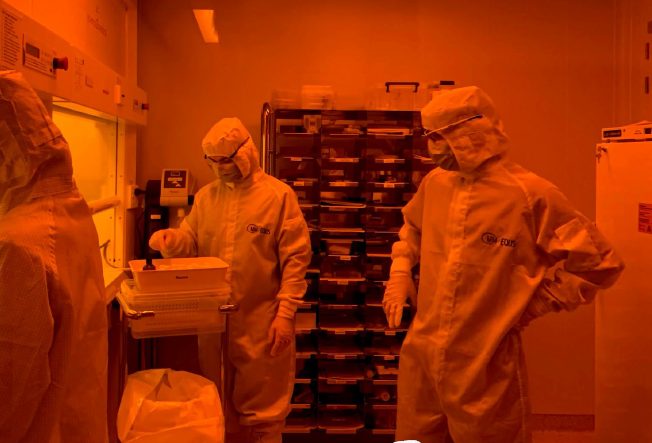
Clean room facilities at Microscopy Australia’s University of Queensland Facility, the Centre for Microscopy and Microanalysis.

Atomic precision at Heavy Ion Accelerators’ ion implantation lab, The Australian National University.
This success story is anchored by a strong relationship between the nation’s universities, research facilities and industry. Rather than functioning as separate stages, Australia’s quantum community operates as an integrated ecosystem.
It began with theoretical research in universities, where ARC Centres of Excellence such as those led by the University of NSW (UNSW) and the University of Queensland (UQ) have then turned theory into reality, literally inventing quantum engineering and designing the components of future quantum computers.
This is where the NCRIS research infrastructure becomes vital: turning the vision of these quantum pioneers into reality and creating a path to commercialisation. The NCRIS-supported facilities, which have been enabling the quantum research and innovation in Australia for over two decades, include the Australian National Fabrication Facility (ANFF), Heavy Ion Accelerators (HIA), the Australian Nuclear Science and Technology Organisation (ANSTO), Pawsey Supercomputing Research Centre, the National Computational Infrastructure (NCI), Microscopy Australia, National Imaging Facility (NIF), and Astronomy Australia Limited (AAL). Together they have helped transform the abstract potential of the quantum revolution into a sovereign commercial capability.
These NCRIS Providers serve as the bridge between the “what if” of fundamental research and the “what is” of industrial application, converting research-led ideas into commercially viable quantum devices. They are not just the machine operators, they are partners in the scientific process. When a research team moves from writing a scientific paper to translational research and a hands-on application, NCRIS Providers step in to guide that transition with sophisticated machinery and the specialist skills and knowledge to use it.
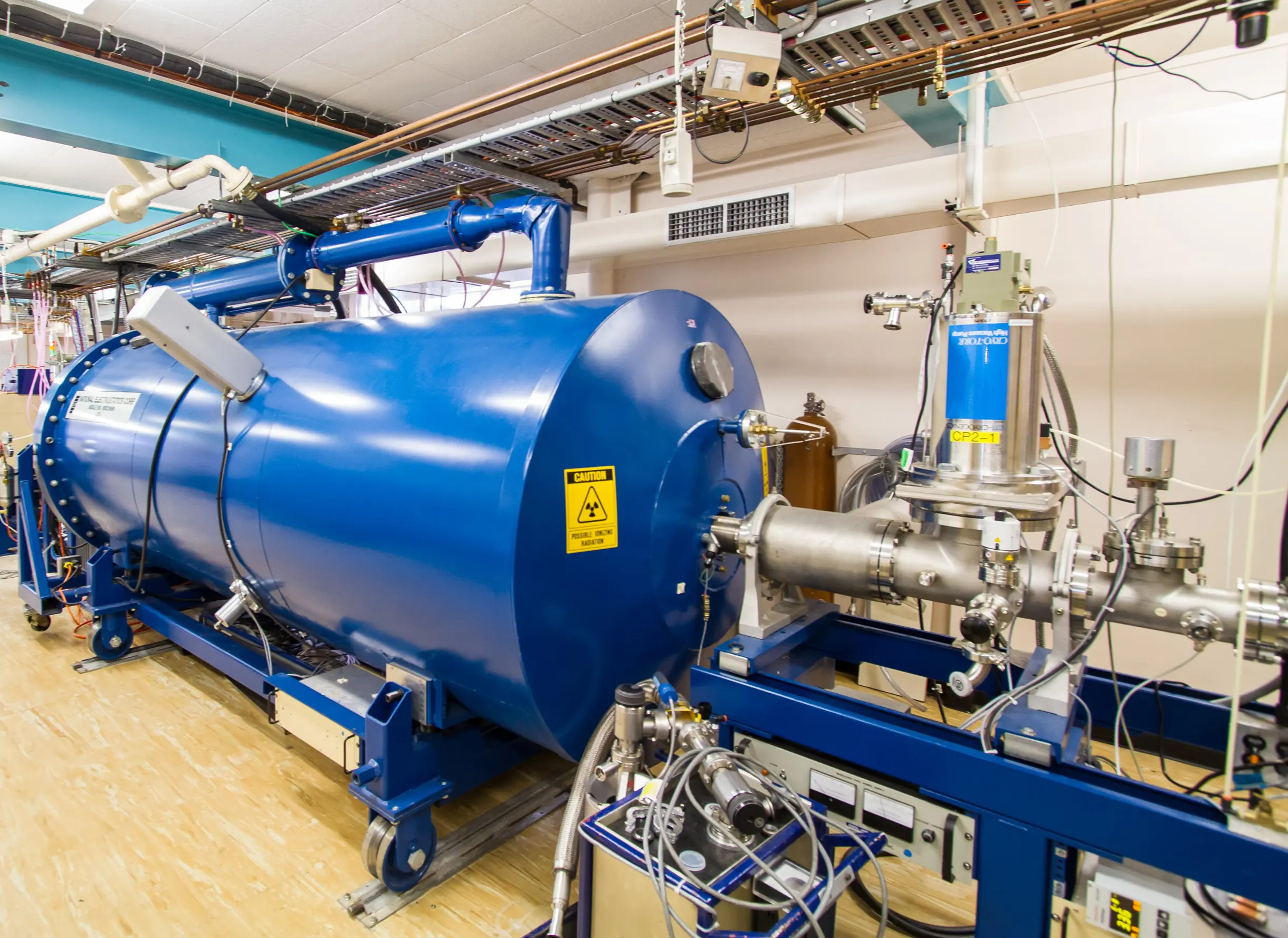
Atomic precision at Heavy Ion Accelerators’ ion implantation lab, The Australian National University.
The genesis of Australia’s celebrated silicon quantum computing architecture is a prime demonstration of this theory-to-application pathway.
Decades of seminal research at UNSW laid the intellectual groundwork for engineering qubits using silicon transistors. However, physically realising this science required the deep expertise and machinery of NCRIS. The fabrication of world-class silicon quantum dot qubits was performed at the ANFF clean-room facility.
ANFF provided the precise silicon-metal-oxide-semiconductor process tools and advanced electron-beam lithography necessary for manufacturing at the atomic scale. Rigorous university research supported by infrastructure has led directly to the formation of high-profile companies like Silicon Quantum Computing (SQC) and Diraq, both based in Sydney. This marriage between research and infrastructure has provided the long-term strategic advantage that has attracted global capital and secured partnerships with multinational giants like the semiconductor manufacturer GlobalFoundries.
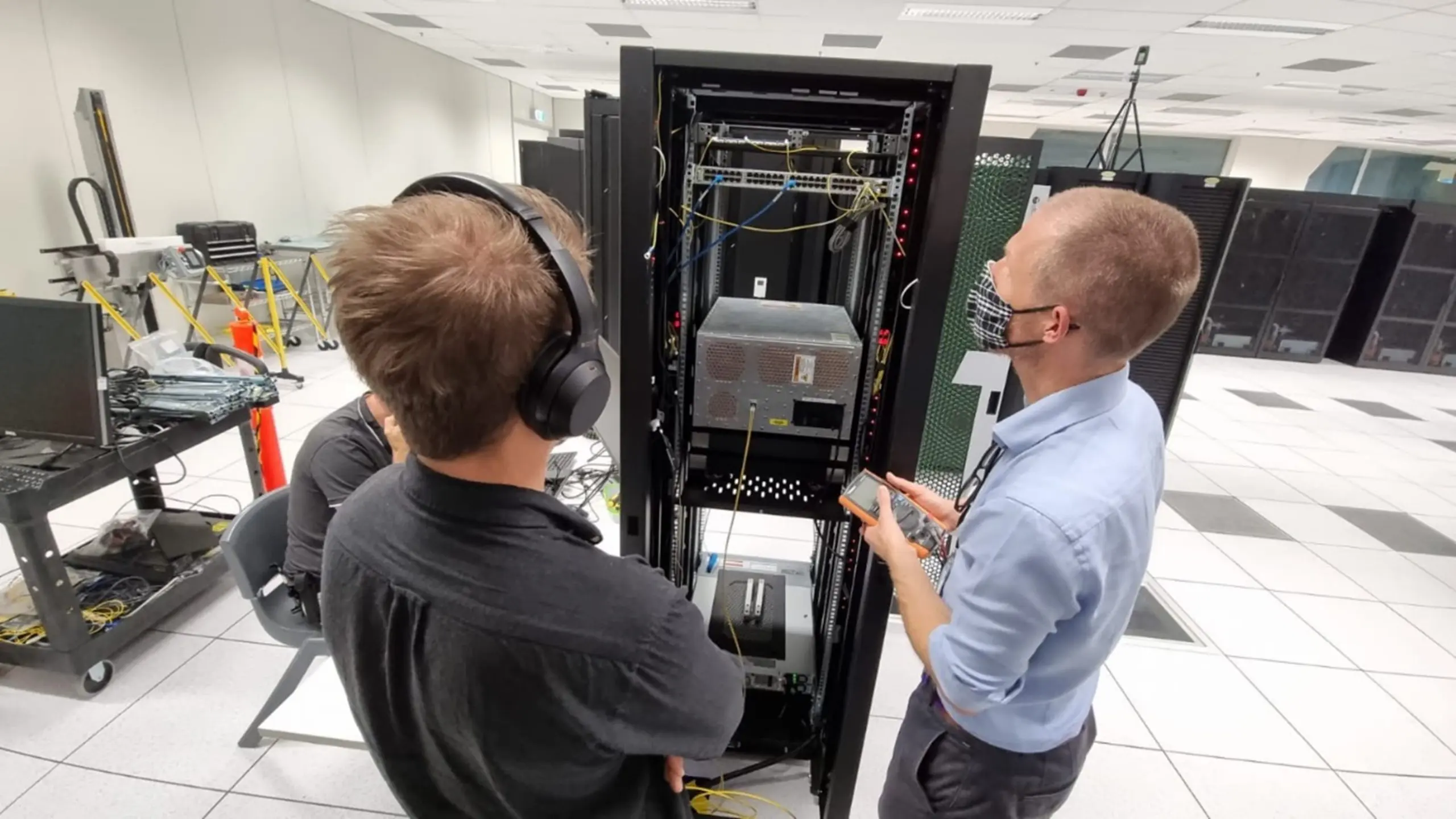
Installation of Quantum Brilliance Quantum Development Kit at Pawsey
While silicon quantum computing has grabbed the headlines, it’s not Australia’s only pathway. The journey of Quantum Brilliance, a global leader in diamond-based quantum technology, illustrates this. The technology was nurtured at the Australian National University (ANU) where it relied on the capabilities of the NCRIS-funded Heavy Ion Accelerators (HIA) to fabricate stable quantum centres in diamond. Quantum Brilliance will continue to rely on HIA capabilities at ANU and the University of Melbourne, which provide the precise ion implantation in diamond the company requires.
This capability is further enhanced by the Pawsey Supercomputing Research Centre. Pawsey’s integration of Quantum Brilliance’s accelerator into its Setonix supercomputer was a world-first validation of the hybrid quantum-classical model, moving Australian capability from theoretical concepts to practical deployment.
Australia has not only led the development of new quantum computing hardware but also the practical ways to use it. The team at Pawsey developed the QBit Bridge, a system that seamlessly connects supercomputers with quantum computers. Built with Quantum Brilliance virtual environment and NVIDIA technology, it demonstrates a practical path toward using quantum computing in real-world applications.
NCRIS support is now enabling the next step of quantum innovation: quantum positioning.
It relies on ultra-precise sensors, including gravity meters, magnetometers and atomic clocks, that offer reliable navigation in environments where GPS is unavailable, such as undersea, underground or in remote areas. These capabilities are critical to defence and national security and are a key focus of international partnerships, including AUKUS.
Companies such as QuantX Labs in Adelaide are physically realising these devices using NCRIS-funded infrastructure. ANFF provides the nanofabrication expertise for complex photonic (light-manipulating) components.
Furthermore, Pawsey’s advanced computing systems support modelling of the extreme conditions these sensors must endure and enable developers to create algorithms that stabilise devices against environmental noise.
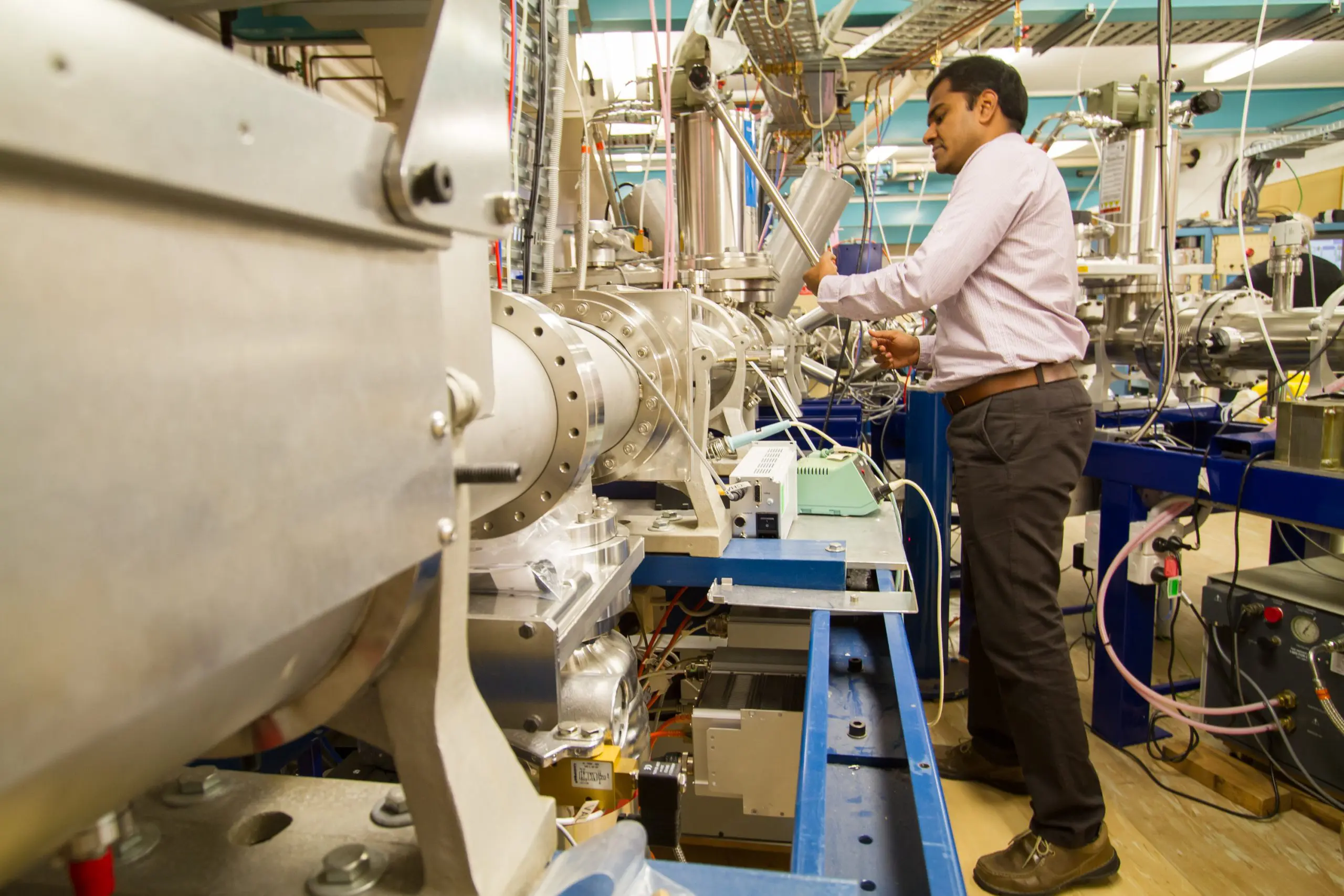
HIA ion implantation lab, The Australian National University

Pawsey Qbit Bridge demo- a step forward in hybrid workflow technology, combining GPU, CPU and quantum processing
Similarly, the emerging field of quantum health is growing rapidly, once again supported by NCRIS infrastructure. It promises a quantum shift in medical diagnostics.
Today’s magnetoencephalographs, which can detect the faint magnetic signals of brain activity, have become essential tools treating severe epilepsy and brain cancers as well as being used in research. But they are heavy, complex machines that use superconducting quantum interference devices (SQUIDs) and require cryogenic cooling with liquid helium. Not surprisingly, they cost millions of dollars.
A new national research centre is developing new brain imaging technologies using quantum-enabled microscopes and room temperature magnetoencephalography. That would enable the production of smaller, cheaper machines, which could be installed in regional locations. The ARC Centre of Excellence in Quantum Biotechnology (QUBIC) will depend on research infrastructure to realise these ultra-sensitive biosensors. ANFF, for example, provides the clean-room environments for fabricating quantum chips, while Microscopy Australia offers the precise atomic-scale understanding and validation crucial to ensure the integrity and functionality of quantum materials and devices.
Meanwhile, in Perth, the National Imaging Facility (NIF) is supporting the development of quantum technology to reconstruct higher resolution ultrasound images for better and faster diagnoses for remote First Nations peoples.
The University of Western Australia, supported by NIF, has launched a bold project to close the healthcare gap for remote Indigenous communities using quantum computing. The initiative uses quantum algorithms to enhance medical imaging, providing city-quality diagnostics to patients in the outback without them needing to travel thousands of kilometres.
By turning fuzzy data into clear diagnostic images, NIF and its partners are demonstrating one of the first tangible, humanitarian benefits of quantum technology.
Quantum is also delivering a healthcare promise at ANSTO, already strongly associated with nuclear medicine. A recent campaign highlighted how its nuclear capabilities, specifically the Australian Centre for Neutron Scattering, are underpinning modern quantum science.
Neutrons, which behave as both particles and waves, are being used to probe the magnetic and spin properties of materials that are invisible to other techniques, providing the data needed to design reliable quantum devices.
One of the most promising applications emerging from this fundamental work is Neutron Capture Enhanced Particle Therapy. This innovative approach uses quantum-level interactions to target aggressive brain cancers.

Technology used to capture the light of distant stars and galaxies is being repurposed to control and measure quantum systems. Image credit: ESO/T. Preibisch.
Finally, the challenge of securely transmitting data in a quantum age is being met by Astronomy Australia Limited (AAL). While traditionally focused on the stars, AAL’s infrastructure supports the research underpinning quantum optics and deep-space laser communications.
AAL supports the development of Quantum Key Distribution systems, technology that uses the laws of physics to secure data against hacking. By leveraging gravitational wave technology and optical observatories, AAL is helping to build the ground stations and optical links necessary for a secure, satellite-based quantum internet.
Through a project led by Macquarie University, Astronomy Australia is repurposing high-end photonics and optical instrumentation traditionally used for astrophysics to control and measure quantum systems. The same precision required to filter starlight from billions of years ago is now being applied to filter and manipulate single photons for quantum communication.
This cross-pollination between astronomy and quantum physics is leveraging Australia’s existing investment in space science. By using the GPU clusters at Swinburne and optical labs at ANU and the University of Sydney, the project is accelerating the development of quantum light sources.
Australia’s $6.1 billion quantum industry, boasting world-class companies and a quantum-enabled workforce, was built on the foundation of long-term and continuous federal funding, in which strategic investment in fundamental university research and NCRIS facilities enabled theoretical ideas to be forged into real-world applications.
This is the formula for securing Australia’s place not only in the quantum era but in many other domains of a modern high-tech global economy.
For this cycle of success to continue in the future, it is essential to sustain sufficient and predictable federal funding of the National Collaborative Research Infrastructure Strategy for the years to come.
Atomic precision at Heavy Ion Accelerators' ion implantation lab, The Australian National University
February 25, 2026