When bones break, doctors often use stainless steel or titanium plates and screws to hold them in place. While they help bones heal, they can cause discomfort and sometimes require further surgery for their removal. They may also loosen over time or lead to bone loss.
Biodegradable implants offer a better solution. They dissolve safely after healing, removing the need for follow-up surgery. However, current magnesium-based biodegradable implants are not strong enough for weight bearing bones, and can release hydrogen gas, which interferes with tissue repair.
Zinc is a promising alternative. It’s safe for the body and helps bone growth, but pure zinc is too weak to support healing in load-bearing bones. Traditional methods to strengthen zinc haven’t worked well, making the metal unstable at body temperature.
Now published in Nature, a team at Monash University led by Prof. Jian-Feng Nie has developed a new zinc-based material that could change how we treat broken bones. Their goal was to create an implant that’s strong enough to support healing and then safely dissolves once it’s no longer needed.
Instead of using the usual method of shrinking the metal’s grain size to make it stronger, the researchers did the opposite. The team discovered that larger grains change how the metal bends and stretches. Instead of breaking apart at the grain boundaries, the metal forms special structures called “accommodation twins” that help it stay strong and flexible.
The new zinc alloy is nearly twice as strong as current magnesium implants and performs better in tests for compression, bending, and long-term durability. It’s also safe for cells, which is important for healing.
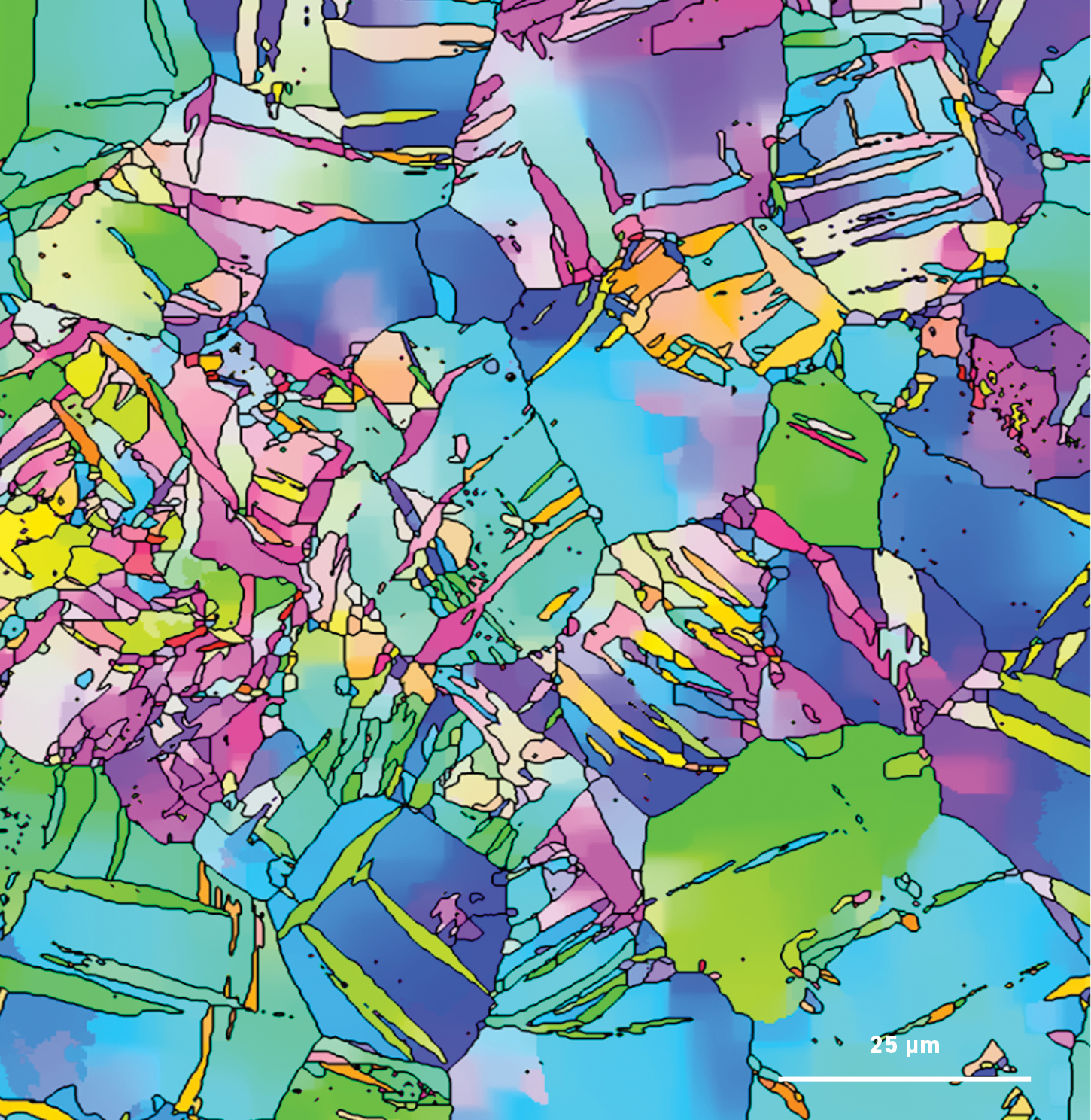
Electron backscatter diffraction map of grains in the zinc alloy after being put under load. It shows many high-angle grain boundaries and accommodation twins (black lines).
Microscopy Australia played a key role in supporting this research. Using advanced imaging tools at the Monash Centre for Electron Microscopy, the team was able to study the metal’s grain size and orientation in detail. These tools helped them understand how the grain structure formed and how the grain structure behaved under load.
This breakthrough could transform orthopaedic care. The new zinc alloy offers a safer, smarter alternative to permanent implants. It supports healing and then disappears, reducing complications and healthcare costs. The research has paved the way for a new spin-out from Monash University, with the aim of bringing these next-generation implants to market.
C. Wu et al., Nature 2025
DOI: 10.1038/s41586-024-08415-8
May 5, 2026