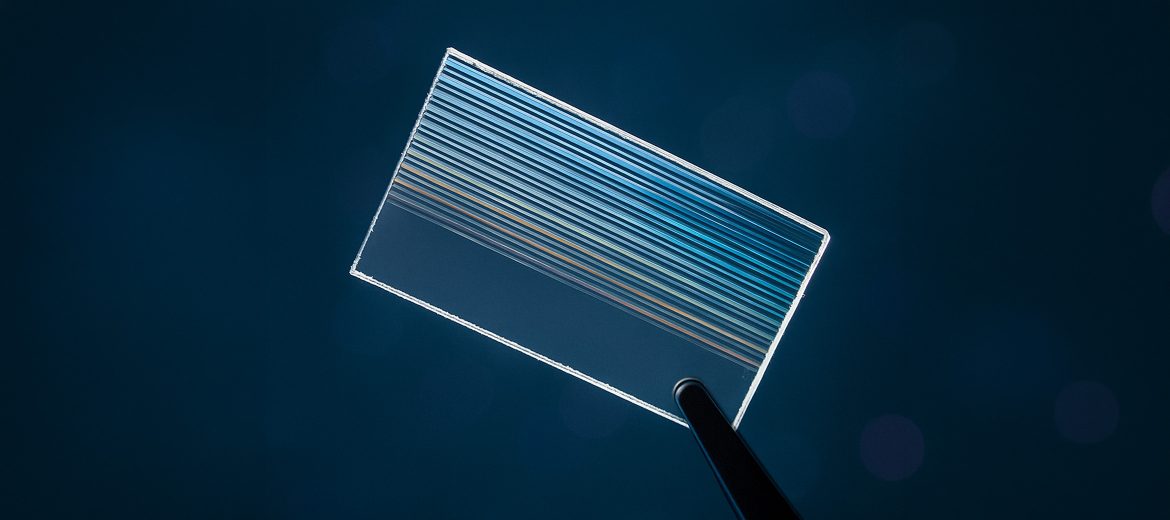
The collaboration between Dr Toney Fernandez, Dr Simon Gross, and Prof. Michael Withford from Macquarie University, and Dr Karen Privat from Microscopy Australia’s UNSW Sydney facility, resulted in a process that allows fine control over the chemical properties of glass, enabling the fabrication of vastly improved waveguides – tiny channels that guide light with minimal loss.
Waveguides are essential components in photonic circuits. They work by creating a path with a different refractive index than the surrounding material, effectively trapping and directing light. These channels are formed using ultrafast laser treatment, and their shape is critical: the rounder the channel, the better it performs. Thanks to the team’s optimised glass recipe, these channels are now significantly more circular, resulting in exceptionally low light loss.
This advance supports the development of complex 3D photonic chips that outperform traditional electronic chips. Along with quantum computing, such chips are vital for energy-efficient, high-speed computing which is becoming increasingly critical as AI adoption drives demand for faster, scalable data processing.
Microscopy Australia enabled access to the advanced techniques of electron microprobe analysis and spectral cathodoluminescence which, when combined with Dr Privat’s expertise, were key to understanding and refining glass composition. They allowed the glass to be optimised for both production and performance. The most optimal recipe generates what they call “Aldente” glass, ideal for ultra-low loss photonic chips and ultrafast laser inscription.
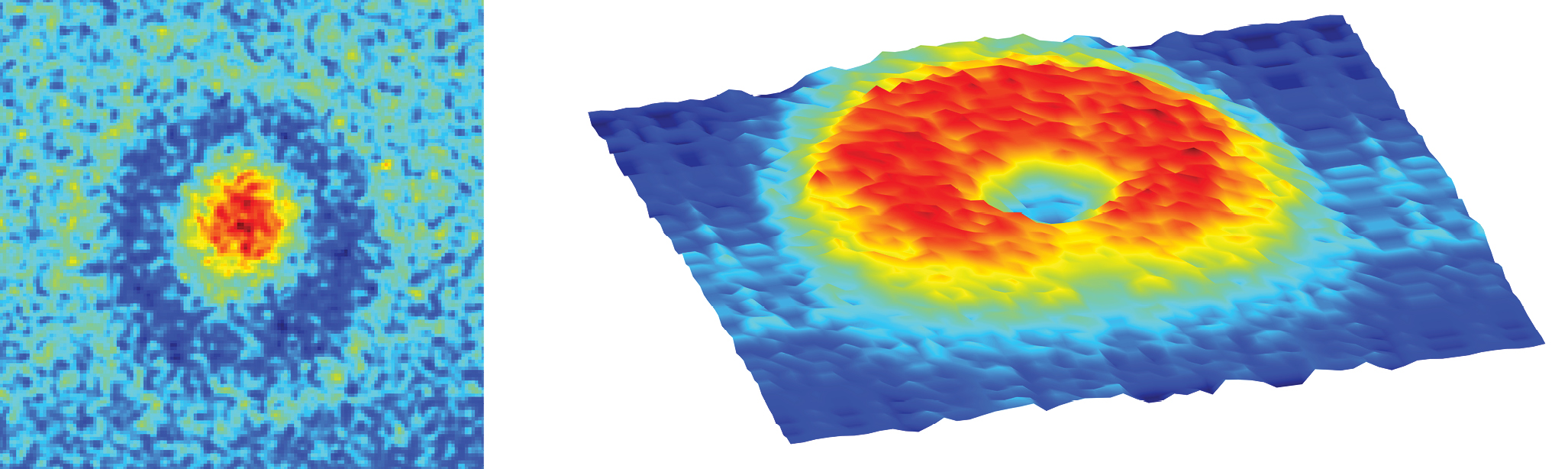
Left: Electron microprobe image revealing structural/compositional variations in the waveguide area. Right: Spectral cathodoluminescence image of the waveguide in glass allows location and identification of various defects formed by interactions of the ultrafast laser with the glass matter interactions.
Modular Photonics, a Macquarie University spin-out, is now commercialising Aldente glass (patent pending). The 2021 publication of the team’s findings attracted attention from global glass manufacturer Schott (Germany), which has recently secured a non-exclusive licence from Modular Photoncs to use the technology. Other companies are also showing interest in this Australian innovation. The Australian National Fabrication Facility also contributed to this project.
T. Fernandez et al., Adv. Functional Materials 2021
DOI: 10.1002/adfm.202103103
May 5, 2026