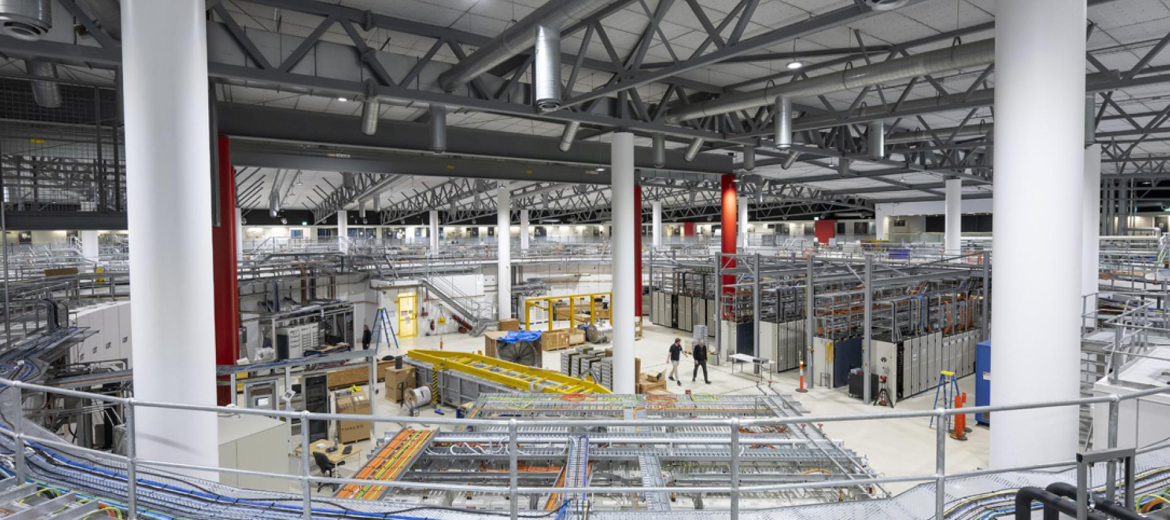
The nascent plans for a new machine will be presented, with an invitation to forward ideas from researchers for desired machine parameters and instruments.
Using synchrotron radiation as a light source for characterisation experiments is now well established across the world. More than 40 storage ring facilities exist, serving thousands of research groups internationally. Melbourne hosts the Australian Synchrotron (AS), which has been running since 2007. In the last 5 years new instruments have been built at the AS some of which are pushing the boundaries of volume imaging with x-rays. They are now looking to a future replacement for this machine which will push those boundaries even further.
Dr. Chris Hall is a member of a small team tasked with running a world-class biomedical and materials imaging facility at the Australian Synchrotron. Dr. Hall is a ‘Senior Instrument Scientist’ at the ANSTO Australian Synchrotron, supporting research which uses the Imaging and Medical beamline (IMBL) on that facility.
Dr. Hall joined Monash University in Clayton, Melbourne as a Senior Research Fellow in 2006; leading programs in instrumentation and medical physics research at the new Australian Synchrotron. He was a member of a Collaborative Research Centre for Biomedical Imaging Development (CRC BID), and an ARC Centre of Excellence in Coherent X-ray Science (CoE CXS).
Whilst at Monash Dr. Hall’s research projects included:
In technical areas he played a key role in the development of x-ray detectors for clinical medical imaging on the synchrotron. As well as the development of a novel gamma ray imaging detector for nuclear medicine, and optimisation of x-ray detectors for coherent diffractive imaging.
Dr. Hall’s enthusiasm for novel x-ray imaging techniques has led to ongoing projects developing new forms of breast cancer diagnosis, and innovative synchrotron-based x-ray radiotherapy methods. Research which is active on the Australian Synchrotron IMBL to this day.
This webinar is presented by Volume Imaging Australia, a special interest group of the Australian Microscopy and Microanalysis Society (AMMS), and Microscopy Australia.