A great example of the long-term nature of this support is Ferronova, launched in 2016 to commercialise magnetic nanoparticles designed to improve the detection and treatment of cancer by tracking the spread of cancer to lymph nodes.
Microscopy Australia’s facilities have supported many aspects of Ferronova’s technology from fundamental discoveries to batch production. It has allowed a detailed understanding of nanoparticle structure and is now used to monitor every batch of tracer produced. Microscopy Australia’s UNSW Sydney and Adelaide University facilities still remain critical to the development of the technology. Below are some key milestones that were supported.
Ferronova brings together technologies from three independent research projects. At the University of South Australia, Prof. Benjamin Thierry was developing a patented sensor to detect magnetic nanoparticles for cancer diagnostics in collaboration with surgeons in head, neck and gut cancers. Simultaneously, Prof. Richard Tilley, director of our UNSW Sydney facility, was commercialising magnetic nanoparticles that he developed at Victoria University of Wellington. Realising they had complementary technologies they collaborated to form Ferronova in 2016.
In parallel, Dr Brian Hawkett and the polymers team at the University of Sydney adapted CSIRO’s RAFT polymerisation technology so it could be applied to emulsions as part of a long-term collaboration with Dulux for paints – enabled by Microscopy Australia’s University of Sydney facility.
Hawkett’s team then started working with Sirtex on cancer applications for the technique, bringing their expertise in polymer stabilisation to the realm of medical micro- and nanoparticles. In 2011 they were granted a key patent for administrable compositions using block copolymers.
In 2017, Ferronova began collaborating with Prof. Brian Hawkett’s team, eventually licensing this polymer stabilisation technology which was used to coat Ferronova’s magnetic nanoparticles, enhancing their functionality. This combination of technologies enabled Ferronova to move their nanoparticles to preclinical studies, including large animal imaging enabled by the National Imaging Facility.
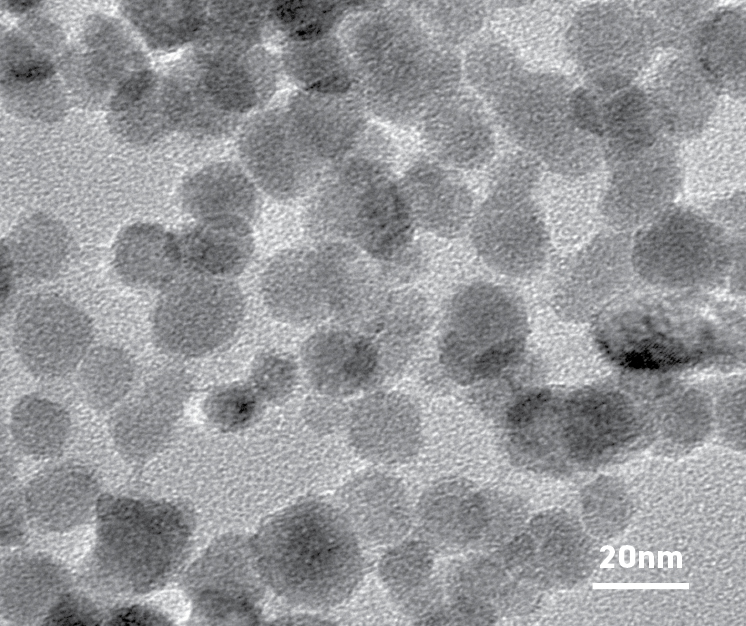
Transmission electron microscope image of Ferronova’s nanoparticles.
Ferronova has now completed its first clinical trial on 15 patients with oral cancer and 40 patients with other cancers. It has also established collaborative programs involving Siemens and other research partners for new medical applications of the technology. Microscopy Australia is still involved, testing every batch of nanoparticles Ferronova produce.
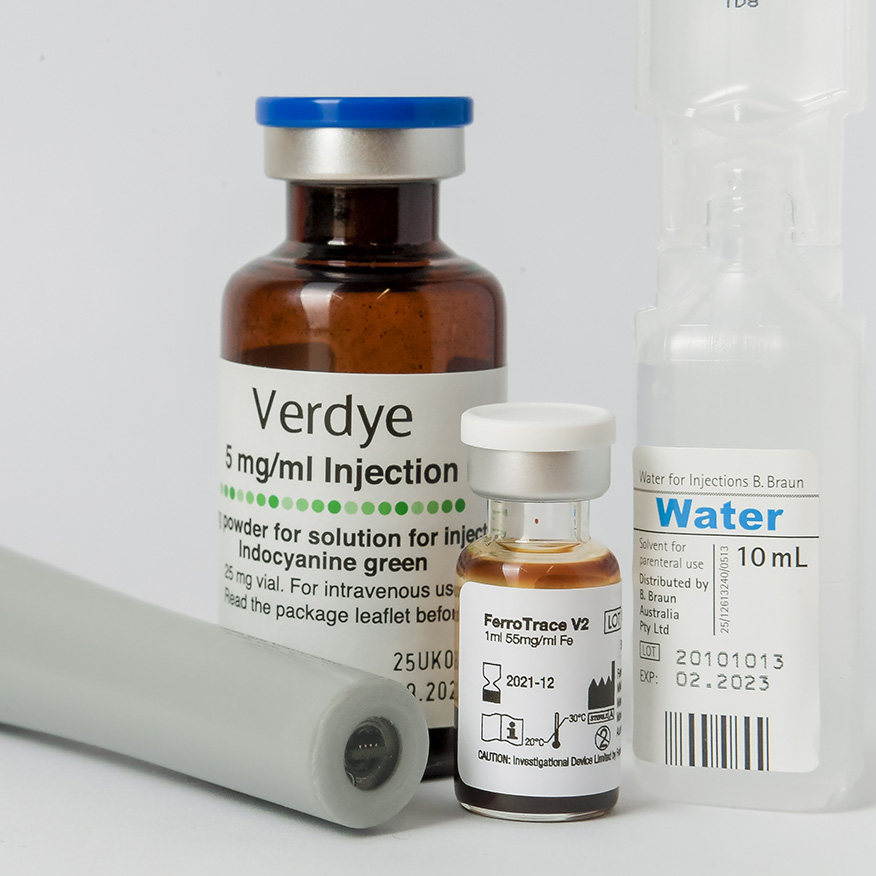
Profs Hawkett, Tilley and Thierry are all Scientific Advisors of Ferronova and continue to be heavily involved in the technology’s ongoing development as it moves towards FDA approval and release onto the market. This includes collaborative programs for new medical applications of the technology involving Siemens and other research partners in cancers where there are significant unmet medical needs including glioblastoma and pancreatic cancer.
September 20, 2024