Vicebio was formed in 2019 to advance The University of Queensland (UQ)’s Molecular Clamp platform, a novel vaccine technology designed to stabilise viral proteins in their native shape. This approach helps the immune system recognise and respond to viruses more effectively, laying the groundwork for broad-spectrum vaccines against multiple respiratory pathogens.
The deal is the largest involving a company that is commercialising intellectual property from an Australian university. The acquisition agreement consists of a total upfront payment of US$1.15 billion, with potential milestone payments of up to US$450 million based on development and regulatory achievements.
Invented by Professor Keith Chappell, Professor Daniel Watterson and Emeritus Professor Paul Young, the Molecular Clamp platform allows researchers to stabilise viral proteins in a shape that better triggers the immune system. It first came to global attention during the COVID-19 pandemic through UQ’s partnership with the Coalition for Epidemic Preparedness Innovations (CEPI).
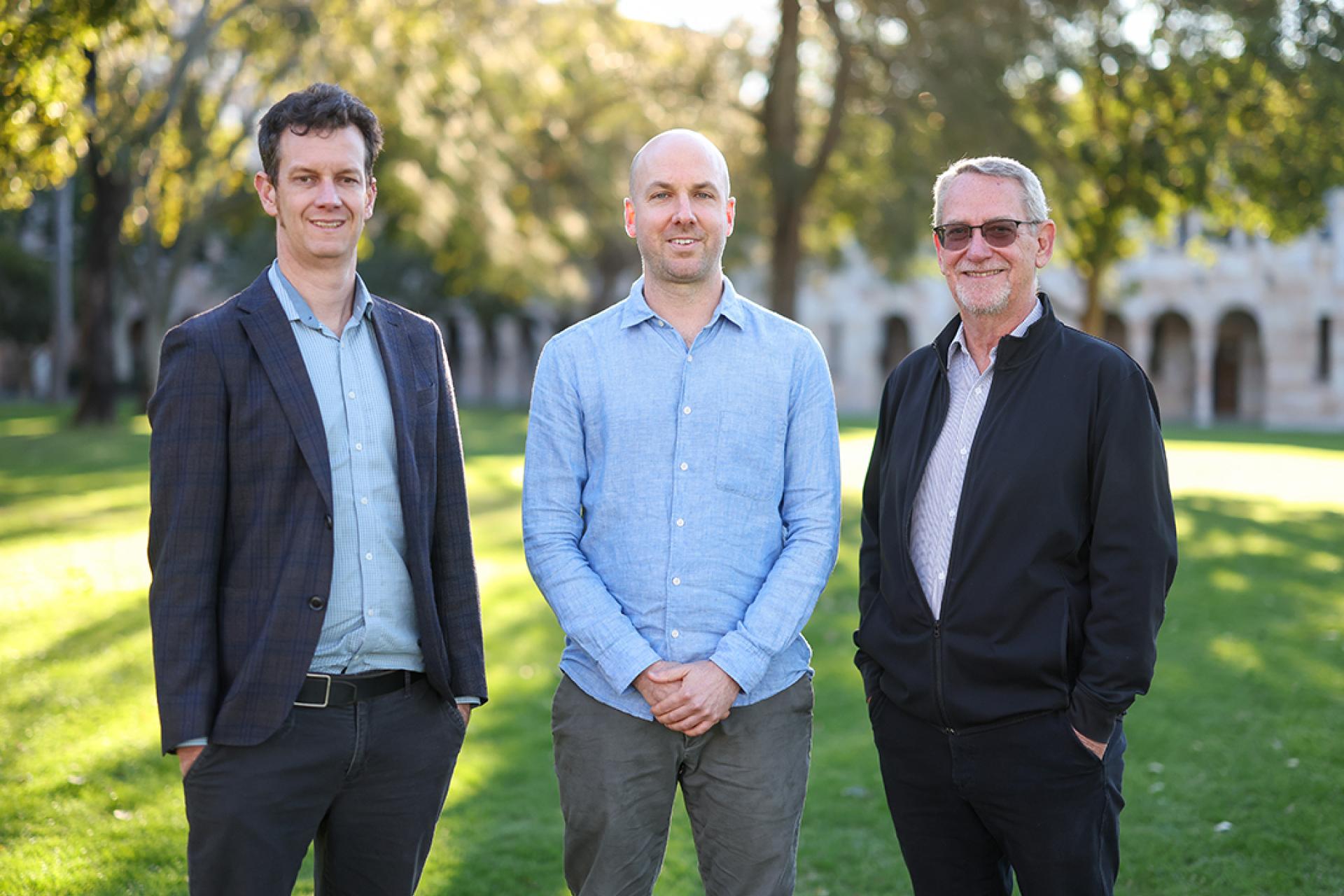
(L-R) Professor Keith Chappell, Professor Daniel Watterson and Emeritus Professor Paul Young, inventors of the Molecular Clamp technology. Photo credit: The University of Queensland.
Two national research infrastructure providers, Therapeutic Innovation Australia (TIA) and Microscopy Australia, are proud to have played a part in this remarkable journey.
UQ’s advancement of the Molecular Clamp technology was supported by TIA’s National Biologics Facility (NBF) and CSIRO Biomedical Manufacturing, and Microscopy Australia’s Centre for Microscopy & Microanalysis (CMM). These facilities, which are funded by the National Collaborative Research Infrastructure Strategy (NCRIS), provide enabling expertise and infrastructure to deliver manufacturing, process development and analytical testing to support the translation of research discoveries towards clinical trials.
This expertise helped to successfully demonstrate proof of concept by manufacturing of a vaccine candidate by NBF and CSIRO against SARS-CoV-2 for two Phase I clinical trials. CMM provided high-resolution cryo-electron microscopy throughout the development process, enabling researchers to confirm that the Molecular Clamp was correctly stabilising vaccine particles in their intended shape across multiple vaccine candidates.
This is a powerful example of how collaborative research infrastructure enables Australian science to go further, supporting academic excellence, industry engagement and commercial translation.
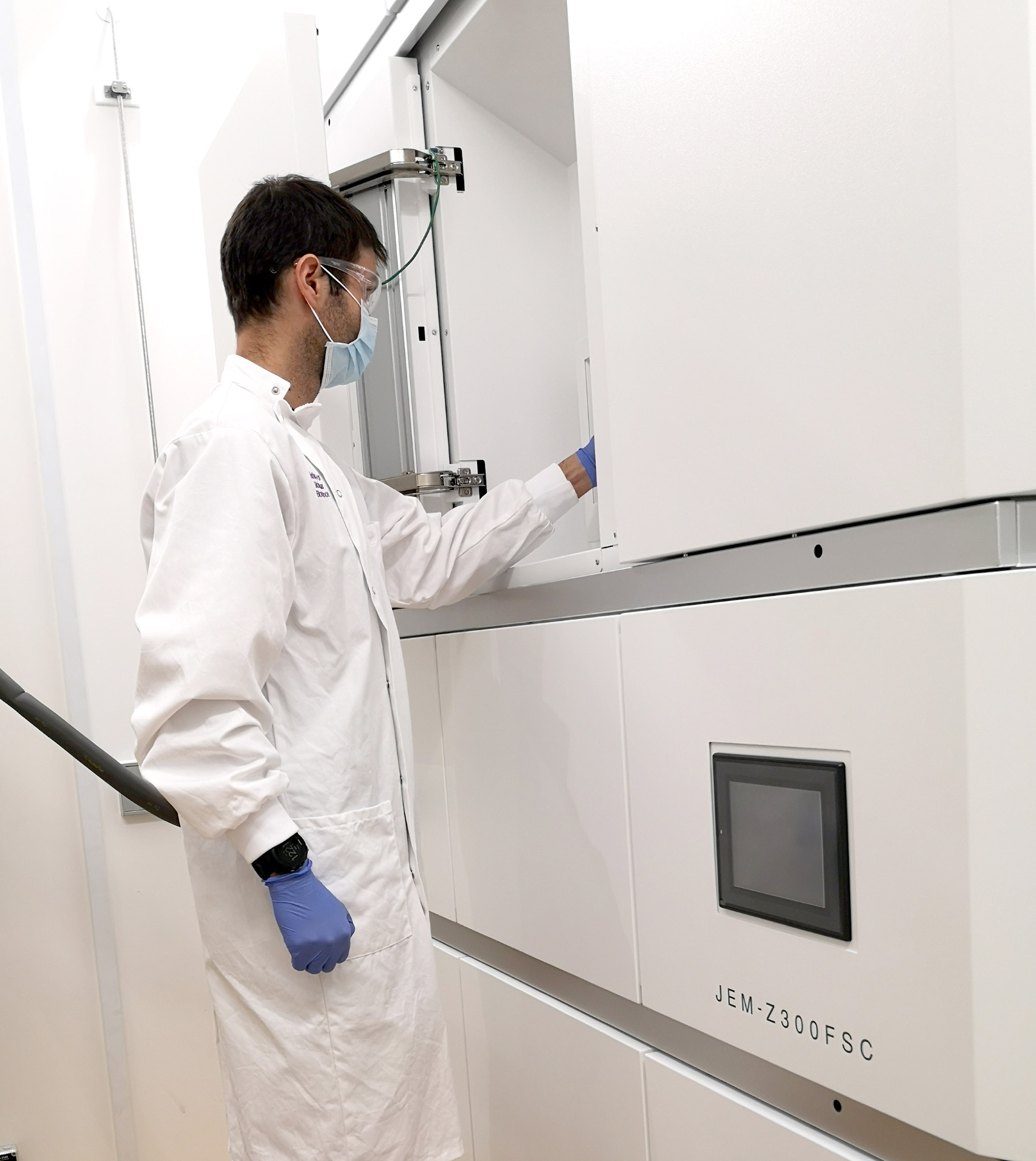
Microscopy Australia Platform Scientist Lou Brillault changing a sample in the cryo electron microscope at the Centre for Microscopy and Microanalysis, UQ, which was used for the molecular clamp research.
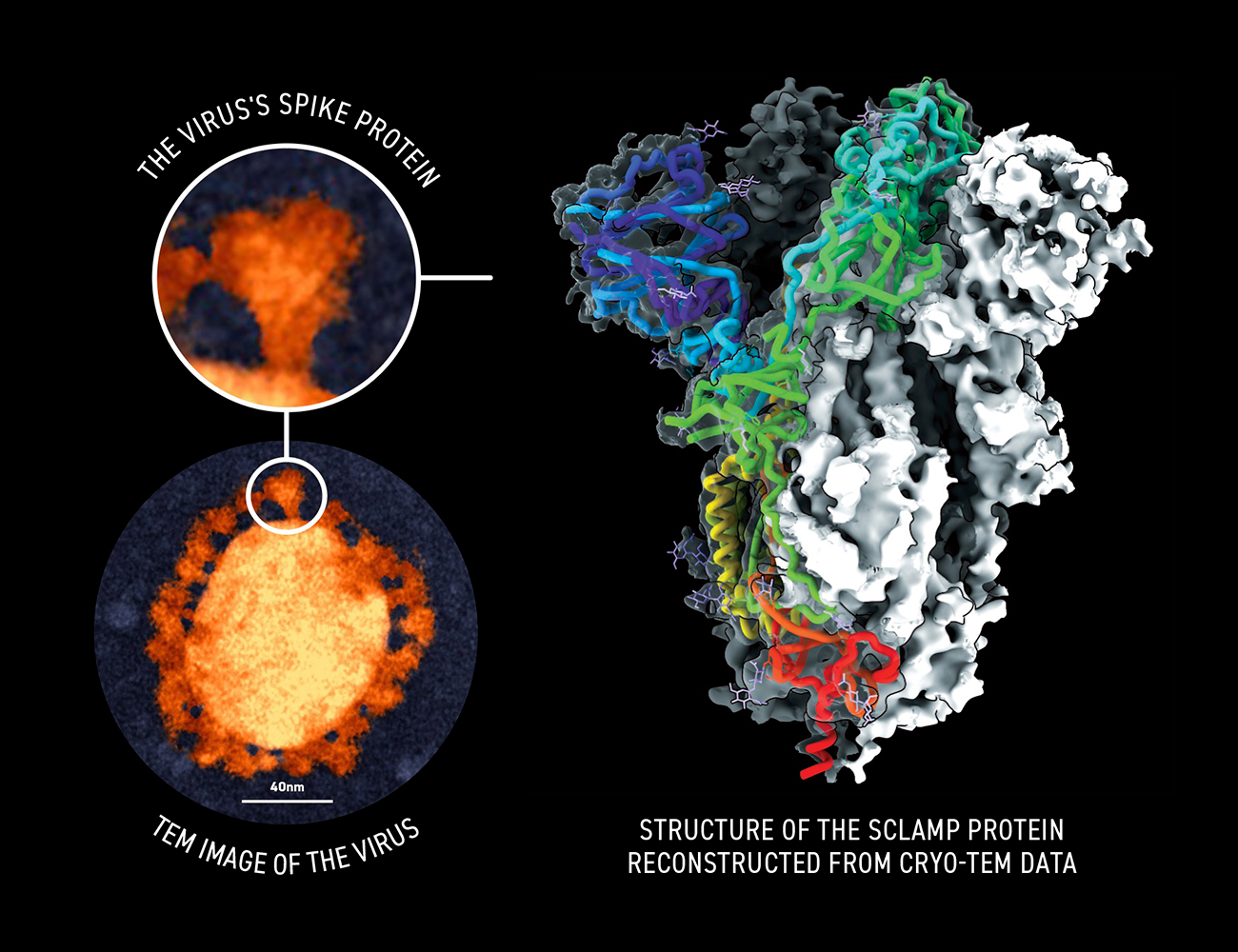
Image of molecular clamp COVID-19 vaccine candidate (right) reconstructed from cryo-electron microscope data collected using the instrument pictured above. By Naphak Modhiran, Daniel Watterson, and Lou Brillault. Read more about it here.
About NCRIS: Funded by the Australian Government, NCRIS supports a national network of research infrastructure providers, delivering world-class equipment, expertise, and services across diverse fields — from gene editing to space exploration. This network enables cutting-edge research, development and translation for the benefit of all Australians.
Researchers in the Chappell lab at The University of Queensland. Photo credit: The University of Queensland.
December 16, 2025