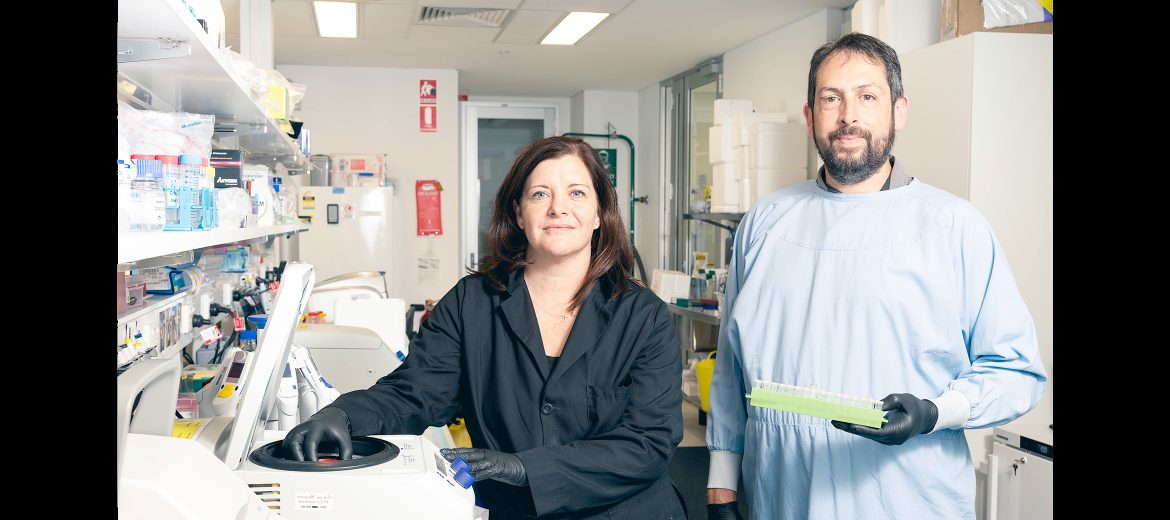
A team of Flinders University researchers, led by Prof. Simon and Dr Vanessa Conn, have made an important new connection between these changes and the actions of circular RNAs, a recently discovered family of genetic fragments present within our cells.
The researchers showed that these circular RNAs stick to the DNA of genes that are commonly damaged and rearranged in cancers, particularly in childhood leukaemias. Prof. Conn said, “This opens the door to using these molecules as new therapeutic targets and markers of disease at a very early stage, when the likelihood of curing cancers is much higher.”
The researchers compared blood from newborns (from their heel prick test) who went on to develop acute leukaemia as infants with children without any blood disorders.
They found that one specific circular RNA was present at much higher levels at birth, prior to onset of the symptoms of leukaemia.
The findings suggest that the abundance of the circular RNA molecules is a major determinant for why some people develop these specific cancer-causing changes and other do not.
The team demonstrated that when the circular RNA sticks to DNA it tends to cause breakages that need to be repaired. However, this repair process is not always completely accurate, allowing errors to creep in. Sometimes these are small mistakes, and sometimes they can be catastrophic rearrangements of the genetic material. These rearrangements can convert a cell from a normal cell into a cancerous cell.
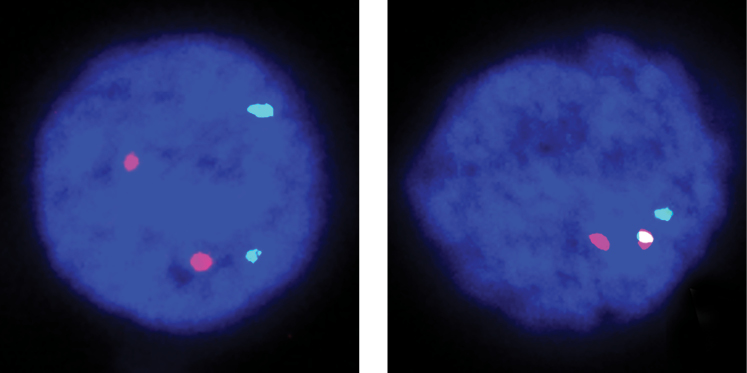
Two cell nuclei (blue) each showing two genes (pink and turquoise). The nuclei on the right has high levels of circular RNAs causing two of these genes to rearrange so they are now next to each other, overlapping in the image. The rearrangement of these two genes can cause the cell to become cancerous.
By using fluorescent microscopy at Microscopy Australia’s University of Adelaide and Flinders University facilities the researchers showed that this process was happening in two different cell types and drove the rapid onset of aggressive leukaemia.
V. M. Conn et al., Cancer Cell 2023
DOI: 10.1016/j.ccell.2023.05.002
Prof. Simon Conn and Dr Vanessa Conn’s team has been researching the role of circular RNAs in DNA damage and cancer genes. Credit: Jonathan Barge, Flinders Foundation.
December 4, 2023