Cholesterol is also a crucial component of cell membranes. For cells to grow, there needs to be enough cholesterol in the cells. How the amount of cholesterol is detected by cells is the subject of research by A/Profs Michelle Halls and Andrew Ellisdon from Monash University, recently published in Nature.
By using cryo-electron microscopy at our Monash University facility the team has determined the structure of a human protein called LYCHOS. This protein acts as a cholesterol sensor and, by understanding its structure, the team has worked out how it drives cell growth and which parts of the protein could potentially be targets for new drugs. Altering regulation of cell growth is an important way of treating diseases such as cancer.
“Cryo-EM has revolutionised drug discovery by enabling researchers to determine the 3D structure of molecules previously too difficult to observe,” A/Prof. Halls said.
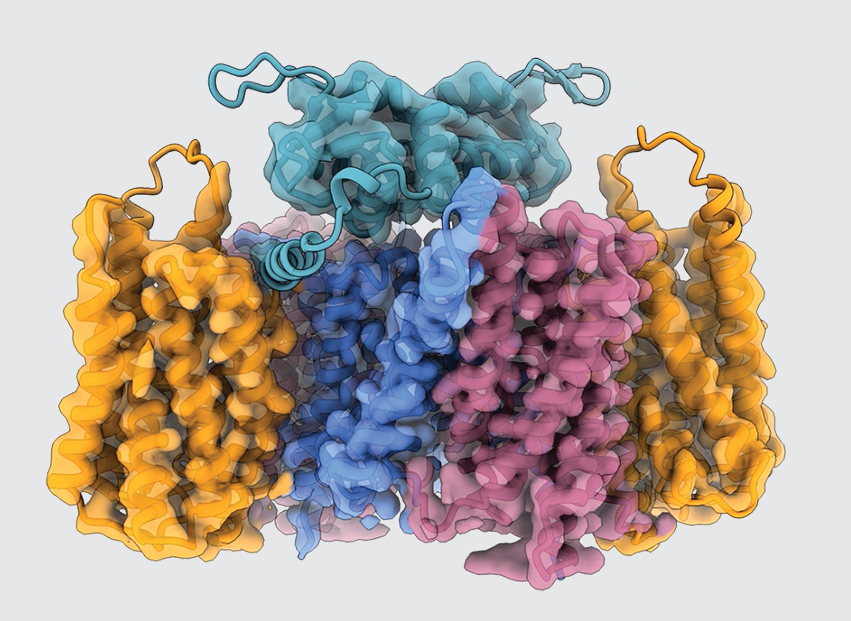
Reconstruction of the LYCHOS protein from cryo-EM data showing the major regions in different colours.
“This state-of-the-art technology has provided us, and drug discoverers around the world, with a precise structural description of the crucial role of LYCHOS as a cholesterol sensor and regulator… the new structural information about LYCHOS opens up a whole new world for drugs designed to block abnormal cell growth and target things like tumour growth and spread, or impaired cholesterol metabolism resulting in neurological conditions,”
he continued.
Bayly-Jones et al., Nature 2024
DOI: 10.1038/s41586-024-08012-9
January 4, 2025