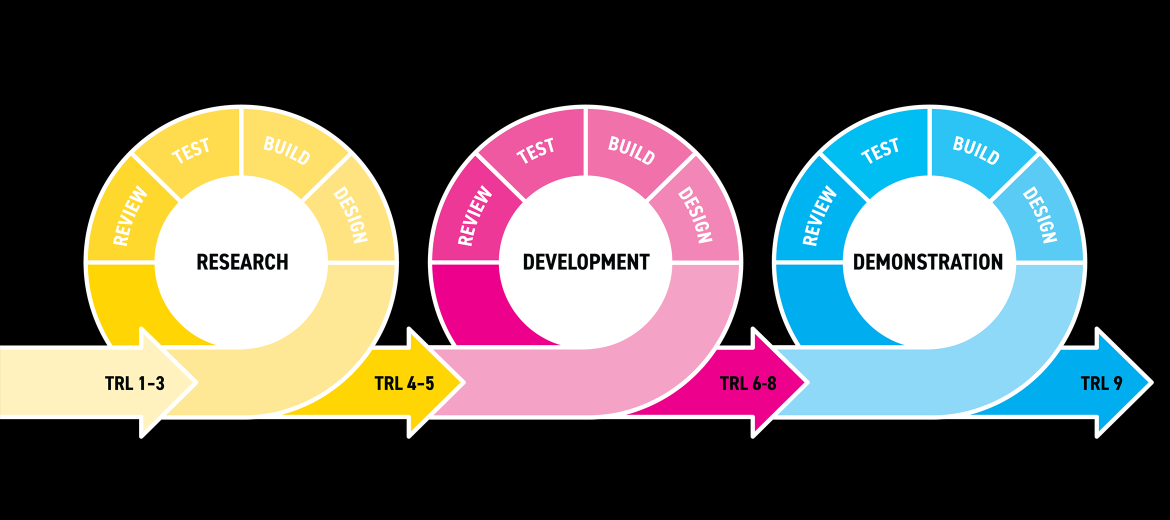
Turning a discovery into a product takes years of iterative testing, refinement and validation, all of which depend on ongoing access to high‑quality research infrastructure.
Microscopy Australia provides essential tools and expert guidance to help ventures move from idea to viable product, delivering critical insights across the entire translation cycle – discovery, proof‑of‑concept, trials, scaling, manufacturing, quality control, failure analysis and regulatory approvals.
The impact is clear. Just 35 of the start-ups supported by Microscopy Australia have secured over $1.6 billion in external capital investment and even more, over $2.4 billion, in licensing deals and acquisitions.
Many of these companies returned to Microscopy Australia’s facilities repeatedly, often over a decade or more. This demonstrates the significant economic value unlocked when researchers and companies have long-term, sustainable access to the right enabling infrastructure. Below is a selection of just a few of the spin-outs and start ups enabled by long-term support from Microscopy Australia’s facilities.
A strong national innovation system depends on research infrastructure, much of which is enabled by the National Collaborative Research Infrastructure Strategy (NCRIS). NCRIS ensures that Australian discoveries can be transformed into high‑value products, services and policy solutions that benefit the nation.
South Australia
From the paint industry to a cancer tracer for surgery – our facilities have regularly supported this nanoparticle research since 1999.
-
- 1999 – Polymer emulsions for paint industry: CSIRO’s RAFT polymerisation method adapted at University of Sydney by A/Prof. Brian Hawkett’s team for emulsions, initially for the paint industry in a long‑term collaboration with Dulux. “There is no better example of industrial collaboration than this,” Tim Davey, Dulux.
- 2003-2016 – Pivot to cancer & key patent: RAFT polymerisation-based method adapted for stabilising magnetic nanoparticles for medical applications with Sirtex. Key patent is granted.
- 2011-2016 – Simultaneous technology development: At the University of South Australia, Prof. Benjamin Thierry was developing a patented sensor to detect magnetic nanoparticles for cancer diagnostics. Simultaneously, Prof. Richard Tilley, director of our UNSW Sydney facility, was commercialising magnetic nanoparticles that he developed at Victoria University of Wellington, NZ.
- 2016 – Ferronova launched: Ferronova is launched to commercialise these complementary technologies.
- 2017 – Incorporating RAFT: Ferronova collaborates with Prof. Brian Hawkett’s team, eventually licensing the RAFT-based polymer stabilisation technology.
- 2022-2026 – Clinical trials: Several clinical trials completed, one ongoing, for lymph node mapping in oesophageal, colorectal, and gastrointestinal cancers. Microscopy Australia facilities used to characterise and test every batch of nanoparticles produced. Also supported by NIF.
- 2025 – $17.5M raised: $6M raised to advance image-guided surgery tracer, bringing total Series A raise to $17.5M.
Queensland
From fundamental research to clinical trials – Vaxxas’ team have used our facilities every year since 2009 in the development of their needle‑free vaccine delivery patch, the HD‑MAP.
- 2011 – Spin-out: Vaxxas founded to commercialise Prof. Mark Kendall’s ‘nanopatch’. Also supported by ANFF.
- 2015 – Recognition: Vaxxas is named a Technology Pioneer by the World Economic Forum.
- 2017 – $25M raised & polio trial: Raises $25M in Series B financing and awarded a World Health Org. grant to support preclinical research in polio vaccine delivery
- 2020 – Licensing deal: Merck licenses exclusive commercialisation rights to a vaccine.
- 2020 – U.S. Govt. deal: $22M award from the U.S. Government Agency leading pandemic response for COVID-19 and pandemic influenza trials.
- 2022 – Pre-clinical trial: Covid-19 vaccine, HexaPro, proved effective against all major variants when given to mice via the HD-MAP.
- 2022 – $34M raised: Vaxxas raises $34M to advance their technology including for mRNA vaccines.
- 2023 – Manufacturing facility: Vaxxas opens a state-of-the-art biomedical manufacturing facility in Brisbane, home to over 130 highly skilled staff.
- 2023–2025 – Clinical trials: Pre-clinical and clinical trials for viruses with pandemic potential, and more including influenza, typhoid and bird-flu. Also supported by TIA.
- 2025 – $90M raised: $49.22M in new Series D equity and $40 million in debt facilities.
- 2025 – TGA approval: Vaxxas receives TGA licence to manufacture the HD‑MAP for clinical trials at its Brisbane facility.
Western Australia
Since 2010, our facilities have been essential for the development of the Hazer process, and continue to be used for R&D. It turns methane and unprocessed iron ore into low‑cost, low‑emission hydrogen.
- 2015 – ASX launch: Hazer Group launched on the ASX raising $5M in investment for a pre‑pilot plant.
- 2019 – Pilot plant success: Successful trial leads to an agreement with Water Corp for a Commercial Demonstration Plant to convert sewage into hydrogen.
- 2022-2023 – Global partnerships: Hazer partner to deliver 2500tpa Canadian hydrogen project for Suncor Energy. They also sign an agreement to develop a plant in Japan.
- 2024 – Commercial plant: Hazer’s commercial demonstration plant is operational. They aim to produce 100t of hydrogen per year.
South Australia
Micro‑X are creating world‑first portable X‑ray devices. Our facilities enabled the development of their proprietary X‑ray technology and now provide ongoing R&D support.
- 2015 – Facility opens: Micro-X open new manufacturing facility in SA, launch on the ASX, and sign a deal with the ADF.
- 2018–2019 – First product: Medical X-ray device manufactured by Micro-X for US company Carestream are installed in hospitals in the US and Australia.
- 2019 – Next-gen X-ray tube patent: Our facilities enabled the development of Micro-X’s in-house designed and manufactured X-ray tube. Previous tubes were sourced from a US supplier. Also supported by ANFF.
- 2020 – Second product: First sales of the Rover, Micro-X’s first product using the new X-ray tube, are facilitated by the World Health Org.
- 2019-2024 – Defence deals: Micro-X develop baggage scanners, an X-ray camera for IED detection, and military medical Rover following deals with the ADF, the UK Ministry of Defence, the US Department of Homeland Security and Thales.
- 2022 – Units reach Ukraine: ~15 battery powered units arrive in Ukraine “This will save thousands of lives of Ukraine citizens” – unnamed Kherson Unit Commander.
- 2024-2029 – World-first portable CT: Field trials of a world-first, air and road ambulance mounted CT scanner for rapid stroke assessment.
- 2025 – Milestones reached: 380+ medical X-ray devices in use globally, 35 countries using their proprietary technology, and 450 X-rays taken in a day by a single Rover unit on the Ukraine frontlines.
Queensland
From product development to quality control, our facilities have provided ongoing support to Graphene Manufacturing Group since 2016.
- 2019 – Production begins: Production plant launched; microscopy used to monitor daily output.
- 2021 – Battery R&D: Developed graphene–aluminium‑ion battery technology with the University of Queensland.
- 2022 – Thermal coating: Graphene‑based spray‑on thermal coating developed for more efficient cooling systems and more.
- 2023 – Battery deal: GMG–Rio Tinto partnership to further develop graphene–aluminium‑ion batteries.
- 2024–2025 – Development sprint: Produced batteries that can be charged in under 6 mins, have a long life cycle, and are safer than lithium alternatives.