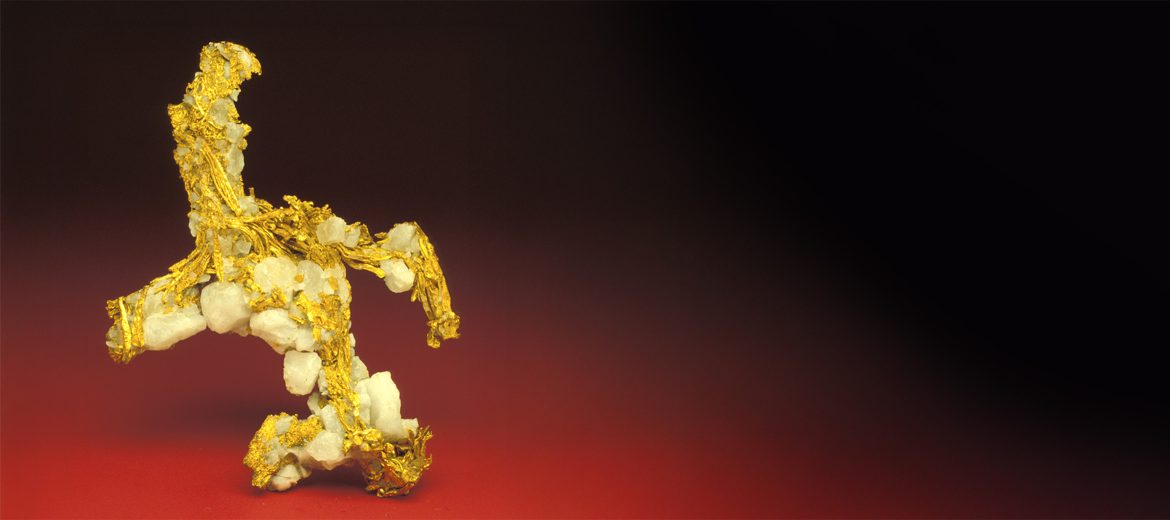
Gold is a rare metal in the Earth’s crust, yet it is sometimes found in surprisingly large nuggets. How these nuggets form is a long-standing geological puzzle. Traditional explanations suggest that gold is deposited from hot fluids as they cool or undergo chemical changes. However, this theory doesn’t explain:
New research led by Dr Chris Voisey from Monash University points to a surprising answer: electricity. Quartz, when subjected to stress, such as during an earthquake, can generate electrical currents. This property is called piezoelectricity (piezo coming from the Greek word “to press”).
The team’s laboratory experiments demonstrated that stressed quartz can electrochemically deposit gold from solution and accumulate gold nanoparticles. The electrical potential generated by the quartz causes the existing gold to act like a lightning rod, attracting more gold to be deposited around it, leading to the formation of larger nuggets over time.
Scanning Electron Microscopy at Microscopy Australia’s Monash University facility was used to examine the gold deposits on quartz surfaces, revealing their distribution, shape, and chemistry. The team observed that gold preferentially deposited on existing gold grains, supporting their hypothesis.
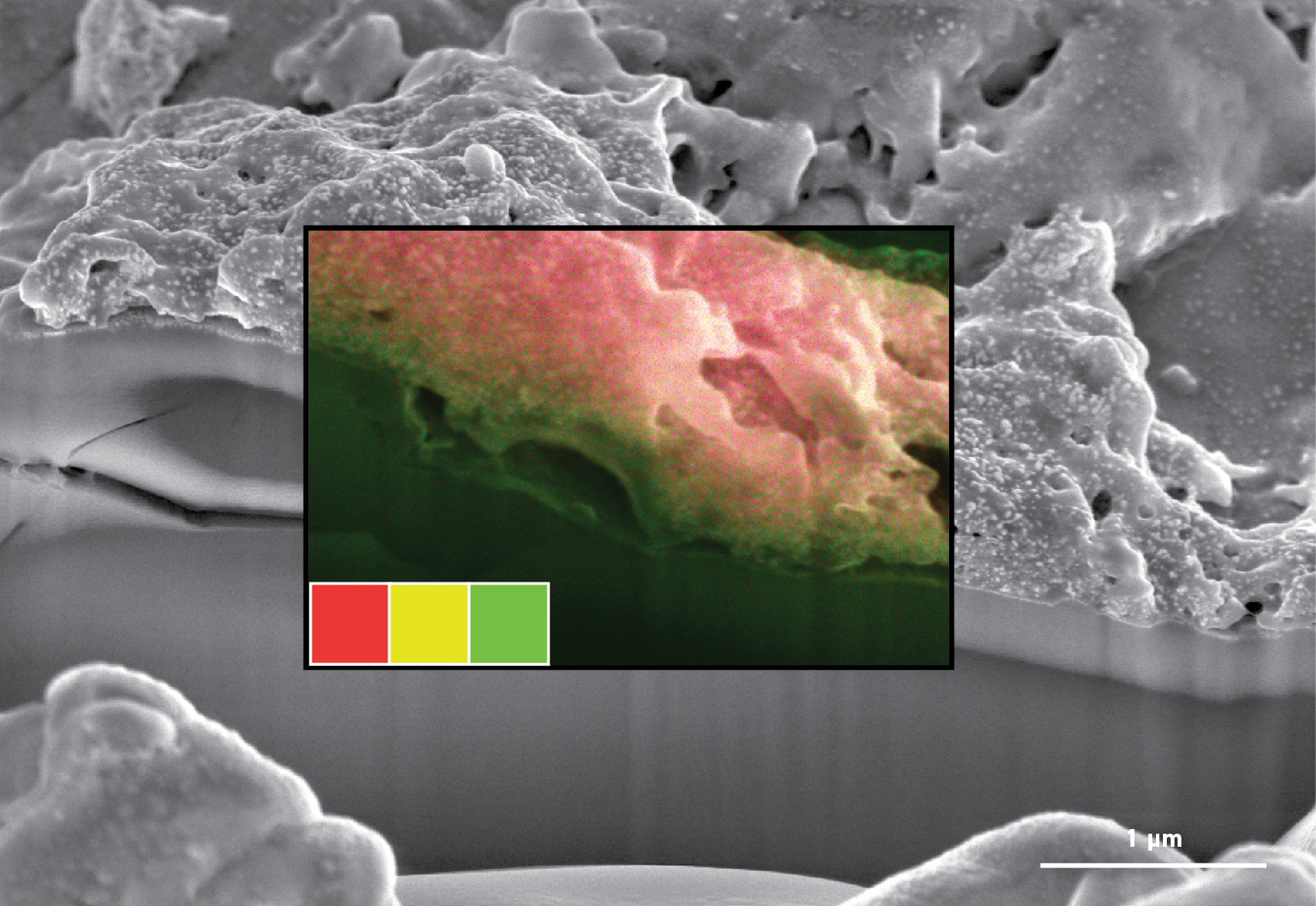
Scanning electron microscope image with elemental mapping of gold (red) deposited onto quartz (yellow and green) via piezoelectric reactions during experiments.
This research provides a plausible explanation for the formation of large gold nuggets in quartz and could have important implications for gold exploration and mining. It highlights the role of earthquakes in gold deposit formation, suggesting that areas with a geological history of seismic activity could be a target for gold exploration. The findings could also lead to the development of new techniques for gold ore processing, potentially using piezoelectricity to extract gold more efficiently.
The research also raises several lines of inquiry for future research such as what earthquake duration is needed to create gold nuggets, why these deposits form in only some quartz veins, and whether the piezoelectric effect can explain the deposition of other metals.
C. Voisey et al., Nature Geoscience 2024
DOI: 10.1038/s41561-024-01514-1
January 4, 2025