Cholesterol is crucial to our cells’ membranes and is essential for proper brain function. It is also the precursor of vitamin D and hormones such as oestrogen, testosterone and stress hormones. Cholesterol is made by the body and absorbed from food, however, high blood cholesterol is linked to heart disease. Cholesterol in the intestine attaches to a protein called NPC1L1 on the surface of intestinal cells. This new study explored how this cholesterol moves inside the intestinal cells for further processing.
To visualise and track cholesterol in gut tissue, it must be labelled. An international research team led by Dr Peter Tontonoz from the University of California Los Angeles used the National Deuteration Facility to label cholesterol with a heavier form of hydrogen (deuterium). This was detected by Dr Haibo Jang using the NanoSIMS instrument at Microscopy Australia’s University of Western Australia facility.
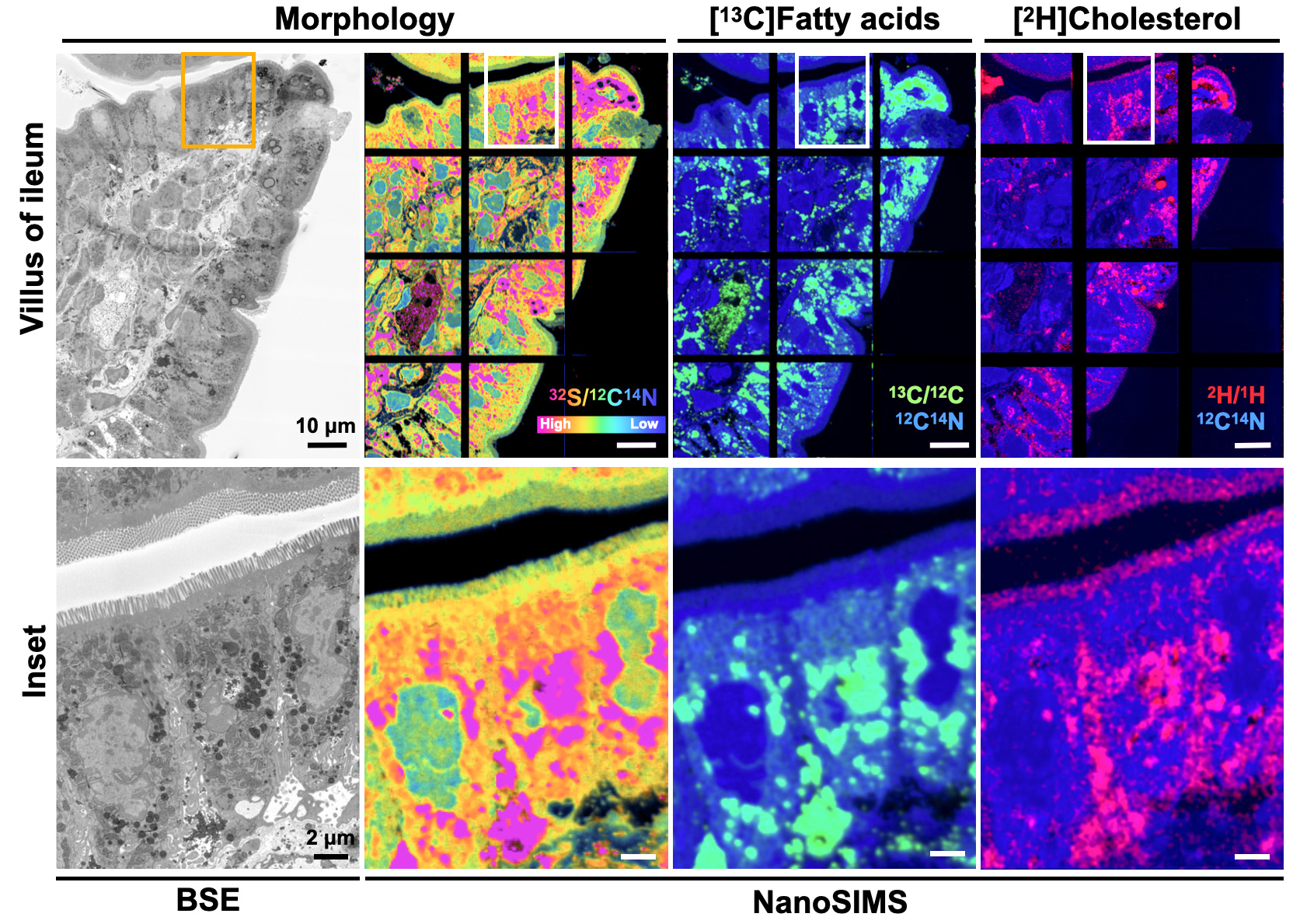
NanoSIMS images showing the distribution of labelled cholesterol and fatty acids in intestinal cells.
Using this approach, the team identified that key proteins called Asters link the NPC1L1 on the intestinal cell surface to the interior of the cell, facilitating the movement of cholesterol into the cell. There, it is processed in a compartment called the endoplasmic reticulum before being transported through the blood to the tissues.
Mice without Asters had less cholesterol in their endoplasmic reticulum and were protected from the effects of high cholesterol in their diet. These findings suggest that the Aster pathway could be a new target for drug development to reduce cholesterol absorption.
A. Ferrari et al., Science 2023
DOI: 10.1126/science.adf0966
January 4, 2025