 Microscopy Australia provides critical infrastructure to enable all stages of the innovation pathway, from feed-in research through to commercialisation and long-established industries.
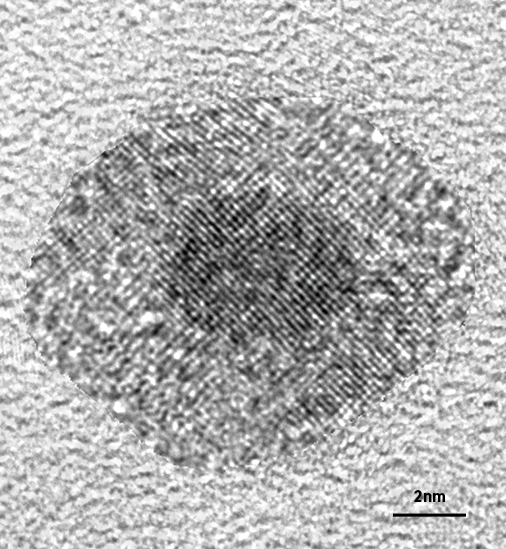
Ferronova is a medical device company founded in 2016 producing magnetic nanoparticles currently in human trials for use in cancer cell tracing.
Spun out of the University of South Australia and Victoria University of Wellington, it licenses IP from the University of Sydney. Their nanoparticles are detectable with a handheld device for use during cancer surgery to highlight lymph nodes in complex areas around head and neck, prostate and colorectal cancers. They will facilitate biopsies while avoiding critical surrounding structures such as arteries.
Research partners at UniSA and UNSW Sydney use transmission electron microscopy in the optimisation of the nanoparticles. The SA Government and BioMedTech Horizons along with seed investors have provided funding.
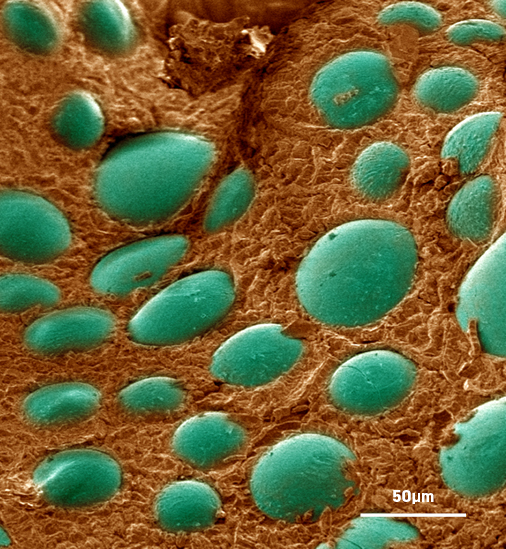
The wonder polymers developed at Flinders University by A/Prof. Justin Chalker and his team,
that can bind and remove mercury and oil from the environment, have recently also been shown to bind
the toxic PFAS chemicals.
The patents for these polymers have been bought by Clean Earth Technologies (CET). CET is making the production equipment in Adelaide where they will then use it to manufacture the polysulfide, also at a plant in Adelaide. This has already started to create a number of new green manufacturing jobs.
A/Prof. Chalker won the New Innovators category in the 2020 Prime Minister’s Prizes for Science.
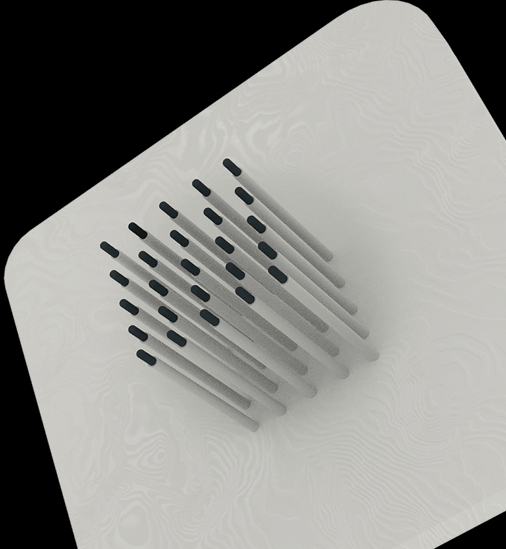 Carbon Cybernetics was founded in 2018 to commercialise innovative carbon-fibre-based nanotechnology developed at RMIT and the University of Melbourne, which predicts epileptic seizures with a higher density of recording electrodes than anything currently available on the market.
With funding from the BioMedTech Horizon’s grant, Carbon Cybernetics is set to test the feasibility of their
device as a permanent brain implant and plan to begin human trials in 2023.
This device will hopefully provide improved planning for how and when to administer treatments, more independence and confidence for patients, and improved career prospects, social engagement and mental health outcomes.
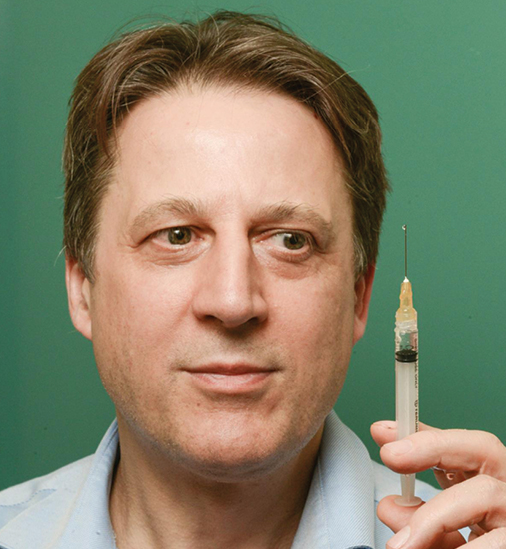 Vaccine formulations generally consist of an antigen that mimics part of the infectious agent, mixed with a compound called an adjuvant that helps stimulate a strong immune response against the antigen.
A vaccine development company in Adelaide called Vaxine Pty Ltd, founded by Flinders University Professor of Medicine, Nikolai Petrovsky (above), has developed an exciting new non-inflammatory adjuvant called Advax™, made from a crystallised form of inulin.
Advax™ has stronger immune-enhancing properties than previous adjuvants, attracting the interest and support of the US National Institutes of Health. Advax™ development has relied on an microscopy at our Flinders University facility to understand its detailed molecular structure and mechanism of crystallisation. Advax™ is being incorporated into many vaccines being tested around the world, most recently in Vaxine’s own COVID-19 vaccine, called COVAX-19®, currently in clinical trials in Adelaide.
December 4, 2020