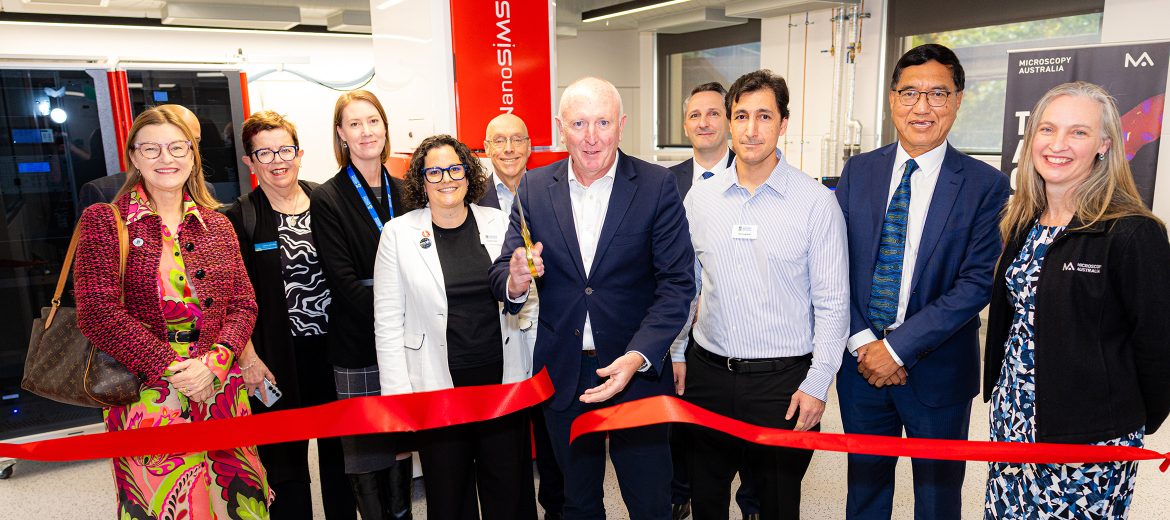
Microscopy Australia has launched a new multimodal microscopy suite at The University of Western Australia (UWA), giving researchers unprecedented ability to track structure, chemistry and function across multiple scales in a single, integrated workflow.
Officially launched by the Hon Stephen Dawson MLC, Minister for Science and Innovation; and Medical Research, the suite allows researchers to bring together multiple techniques, enabling them to connect large-scale structure with cellular‑ and molecular‑level processes, providing critical insight into complex biological, environmental and material systems.
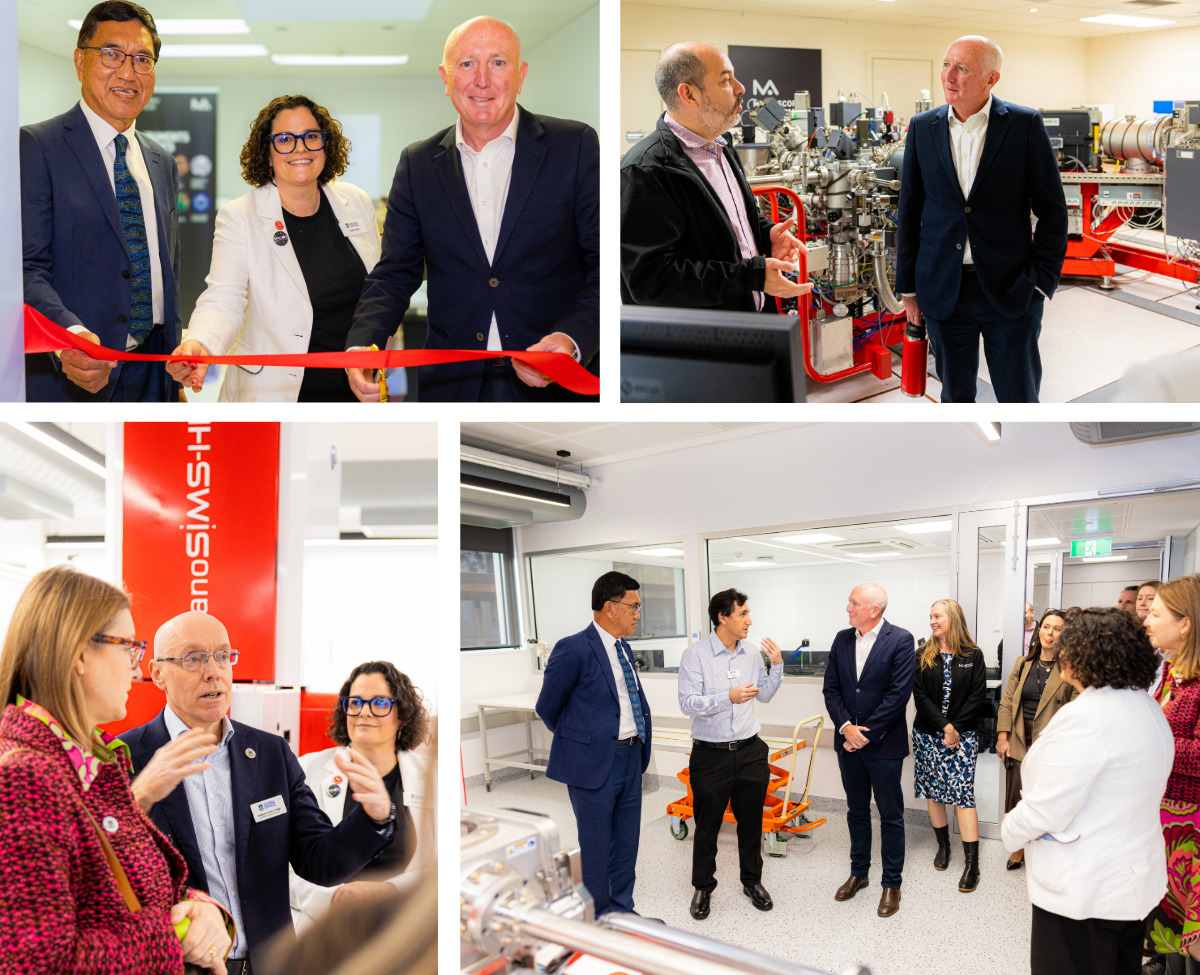
“It’s exciting for us to have access to this technology in Western Australia for the first time, particularly the NanoSIMS which is one of only three in the world currently,” said UWA Deputy Vice‑Chancellor (Research) Professor Anna Nowak.
“It allows us to take elemental and isotopic images at very high resolution a few thousand times smaller than a human hair, which is small enough to see inside an individual cell. As an example of how it could be used, if you were developing a new type of drug and wanted to see how that drug was working inside a cell, it could be used to capture that impact.”
The suite brings together a complementary set of advanced imaging technologies at the Centre for Microscopy, Characterisation and Analysis (CMCA), including Australia’s only high‑resolution NanoSIMS, Australia’s first next-generation serial block-face scanning electron microscope, new confocal capabilities, an upgrade to the large geometry SIMS instrument, and Western Australia’s first light sheet microscope. These capabilities were made possible through industry partners CAMECA, Zeiss and Leica.
“By combining these imaging approaches into a single suite at the CMCA, we’re giving researchers the tools to build a far more complete picture of how materials and living systems behave. It’s a powerful capability for the research community both in Western Australia and nationally,” said Dr Crystal Cooper, Director of the Microscopy Australia facility at CMCA.
Together, these capabilities support new research insights into crop resilience, disease mechanisms, environmental change, critical minerals and advanced materials, areas of strategic importance to both Western Australia and the nation.
The investment was delivered through a coordinated partnership between the Australian Government via the National Collaborative Research Infrastructure Strategy (NCRIS); the Western Australian Government; and The University of Western Australia. The light‑sheet microscope was funded through a successful ARC LIEF grant with partners including Curtin University, Murdoch University, the Perron Institute and The Kids Institute.
Microscopy Australia Chief Executive Officer Dr Lisa Yen said the new suite demonstrates the impact of sustained, collaborative investment in national research infrastructure.
“By bringing these capabilities together in one place and making them accessible to researchers across Australia, we’re enabling discoveries that address real‑world challenges and deliver long‑term national benefit.”
June 5, 2026