Disease‑causing microbes threaten the health of bacteria, plants and animals, yet the biological mechanisms that defend against infection remain poorly understood. Because different organisms have evolved diverse immune strategies, uncovering these fundamental defence processes is critical to developing new ways to protect crops, ecosystems and human health.
A major international study, led by Prof. Bostjan Kobe from the University of Queensland (UQ) and A/Prof. Thomas Ve from Griffith University has been published in the journal Science. It examined how bacteria use a small molecule called nicotinamide adenine dinucleotide (NAD) to protect themselves against bacteriophages.
Using a wide range of techniques, the team investigated an enzyme that changes the structure of NAD into two circular forms. This conversion happens when a bacteriophage infects the bacterium. Once formed, the circular NADs activate the bacterium’s immune system to help it fight off the bacteriophage.
The team worked out how NAD is converted to the circular forms and, by using cryo-electron microscopy at Microscopy Australia’s UQ facility, could identify exactly which bits of the enzyme are responsible for the conversion. Using X-ray crystallography they also showed that the circular NAD activates a crucial bacterial defence protein by changing its shape.
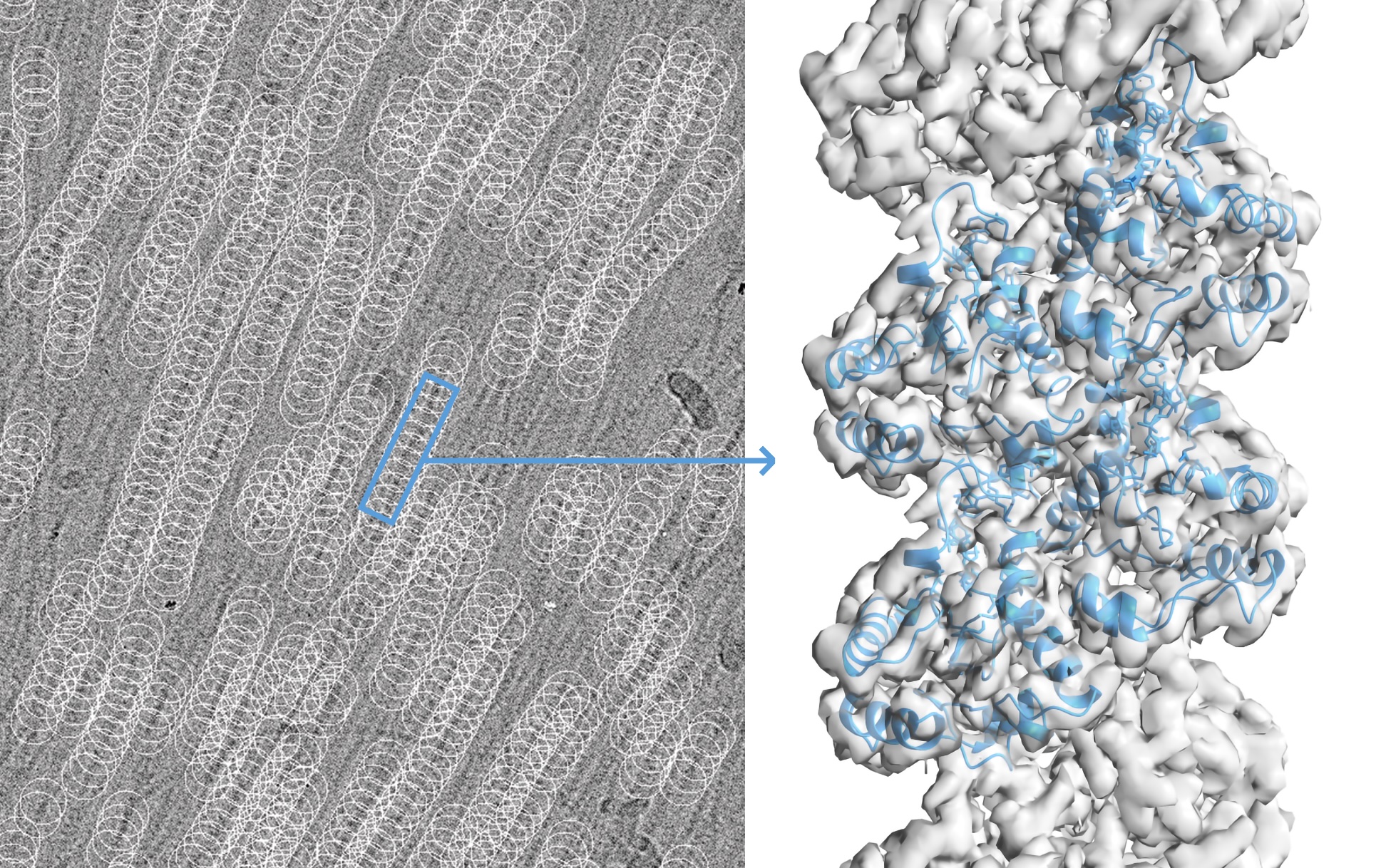
Left: Cryo-transmission electron microscope image of multiple copies of the bacterial enzyme. The circles show individual molecules that were selected for image processing to reveal the final structure that can be seen on the next page.
Right: The structure of the bacterial enzyme generated from cryo-electron microscopy data at 0.274 nm resolution.
Surprisingly, the researchers found that one of these circular NADs (3′cADPR) helps bacteria to infect plants. Pseudomonas syringae is a bacteria that infects a wide range of plants and can cause severe economic losses. P. syringae’s enzyme has developed extra functions that help the bacteria infect the plant. The enzyme is transferred into the plant as the bacterial infection takes hold. This then produces the circular NADs in the plant, which suppresses that plants immune system.
“This study, published in the world-leading journal Science, provides atomic level detail of an intricate biological process” – Prof. Mark von Itzstein AO
This fundamental research brings substantial new understanding of the complex biology of infection and defence mechanisms, opening up areas of endeavour. This will ultimately inform design of new drugs to target important diseases of plants, animals and humans.
M. Manik et al., Science 2022
DOI: 10.1126/science.adc8969
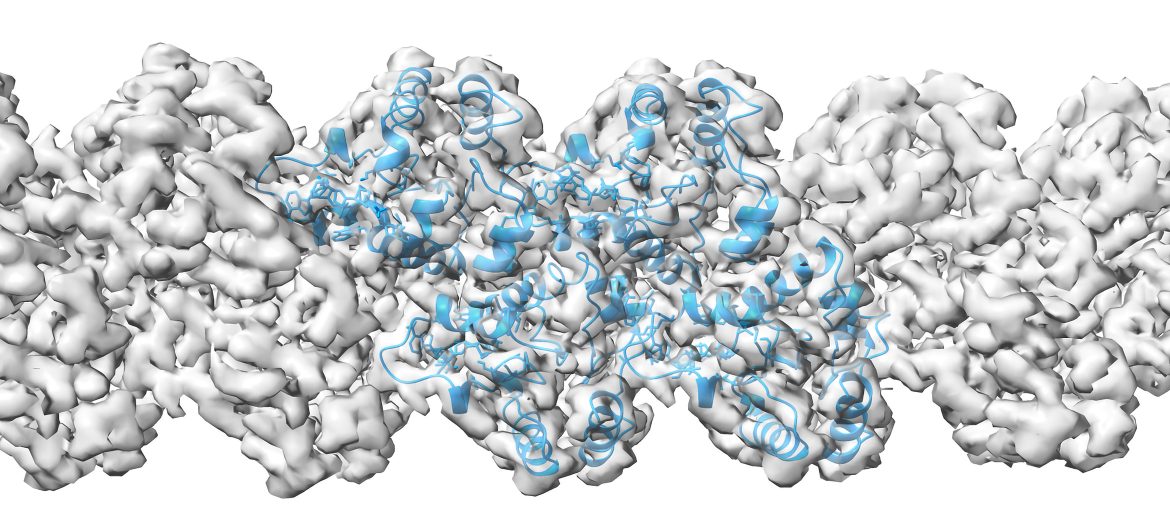
The structure of the bacterial enzyme generated from cryo-electron microscopy data at near-atomic resolution.
December 4, 2023